
Why Facial Volume Loss Shouldn’t Define Your Appearance
Facial fat grafting is a procedure that removes excess fat from one area of your body—like your abdomen or thighs—and transfers it to areas of your face that have lost volume due to aging or weight loss. This creates a two-in-one benefit: body contouring where you have extra fat and volume restoration where you need it most.
Quick Overview: What You Need to Know About Facial Fat Grafting
- What it is: A surgical procedure using your own fat to restore facial volume and reduce wrinkles
- How it works: Fat is harvested via liposuction, purified, then carefully injected into the face
- Common areas treated: Cheeks, temples, under-eye hollows, nasolabial folds, lips, jawline
- Cost range: $5,000 – $8,000+ depending on extent and location
- Recovery time: 1-2 weeks for initial healing, 3-6 months for final results
- Results last: 5-7 years or more (potentially permanent)
- Fat survival rate: 35-65% of transferred fat typically remains long-term
Unlike temporary dermal fillers that require repeated treatments, facial fat grafting uses your body’s own tissue to create natural-looking, long-lasting results. The transferred fat contains growth factors and stem cells that may even improve your skin’s texture and quality over time.
About 65% of the fat is reabsorbed by your body in the first few months after the procedure, but the remaining 35% typically stays in place permanently. This is why surgeons often slightly overcorrect during the initial procedure to account for this natural reabsorption.
As Dr. Allen Rosen, a board-certified plastic surgeon recognized by Castle Connolly Medical for twelve consecutive years as one of America’s premier plastic surgeons, I have performed facial fat grafting procedures for over two decades at The Plastic Surgery Group in New Jersey. My approach combines surgical precision with an understanding of facial aesthetics to help patients achieve natural, lasting rejuvenation that aligns with how they feel inside.

What is Facial Fat Grafting and How Does It Work?
As we age, our faces naturally lose volume, leading to a hollow or sunken appearance, wrinkles, and folds. Facial fat grafting, also known as autologous fat grafting, offers a natural solution. This procedure uses your body’s own fat to restore lost volume, improve facial contours, and refresh your appearance.
Facial fat grafting uses your own adipose tissue (fat), unlike synthetic dermal fillers. This makes it 100% biocompatible, eliminating the risk of allergic reactions and creating soft, natural-looking results. The transferred fat also contains growth factors and stem cells, which can improve skin quality and texture.
For a clearer understanding, let’s compare facial fat grafting with traditional dermal fillers:
| Feature | Facial Fat Grafting | Dermal Fillers |
|---|---|---|
| Source | Patient’s own fat (autologous) | Synthetic substances (e.g., hyaluronic acid, calcium hydroxylapatite) |
| Longevity | Long-lasting to potentially permanent (surviving fat cells) — 5-7 years or more | Temporary, typically 6-18 months, requiring regular touch-ups |
| Cost | Higher upfront cost, but potentially more cost-effective long-term due to permanence | Lower upfront cost, but recurring expenses for maintenance |
| Results | Natural feel and appearance, potential for improved skin quality | Natural appearance, but no regenerative benefits to skin |
| Procedure | Surgical (liposuction, processing, injection), typically 1-4 hours | Minimally invasive (injection only), typically 15-60 minutes |
| Body Contouring | Dual benefit: removes fat from one area while adding to another | No body contouring benefit |
| Allergic Reaction | Virtually no risk (uses own tissue) | Minimal, but possible with synthetic materials |
Facial fat grafting is more than just a filler; it’s a regenerative treatment that can offer comprehensive and enduring anti-aging benefits. We often discuss its potential as part of a broader strategy for anti-aging plastic surgery procedures to achieve a truly refreshed and youthful look. For more in-depth scientific research on this innovative technique, you can explore the comprehensive scientific research on autologous fat grafting.
Understanding the Facial Fat Grafting Procedure
The beauty of facial fat grafting lies in its neat three-step process, turning unwanted fat into a powerful tool for facial rejuvenation.

Step 1: Fat Harvesting (Liposuction)
The procedure begins with gentle liposuction to collect fat from a donor site, such as the abdomen, flanks, or thighs. This step provides the dual benefit of gathering fat for your face while subtly contouring the donor area. It’s like getting a mini liposuction as a bonus!
Step 2: Fat Processing & Purification
The harvested fat is purified to separate healthy fat cells from other fluids. This is typically done through centrifugation, where the fat is spun to isolate the most viable cells, including regenerative stem cells crucial for the graft’s long-term survival.
Step 3: Fat Injection
The final step involves strategically injecting the purified fat into targeted facial areas. Using fine cannulas and a micro-droplet technique, tiny amounts of fat are placed in multiple layers. This ensures a proper blood supply for maximum survival and creates smooth, natural results. A slight overcorrection is often performed to account for natural reabsorption.
Common Treatment Areas and Conditions Addressed
Facial fat grafting is a remarkably versatile procedure capable of addressing a wide array of aesthetic concerns to restore harmony and balance to the face.
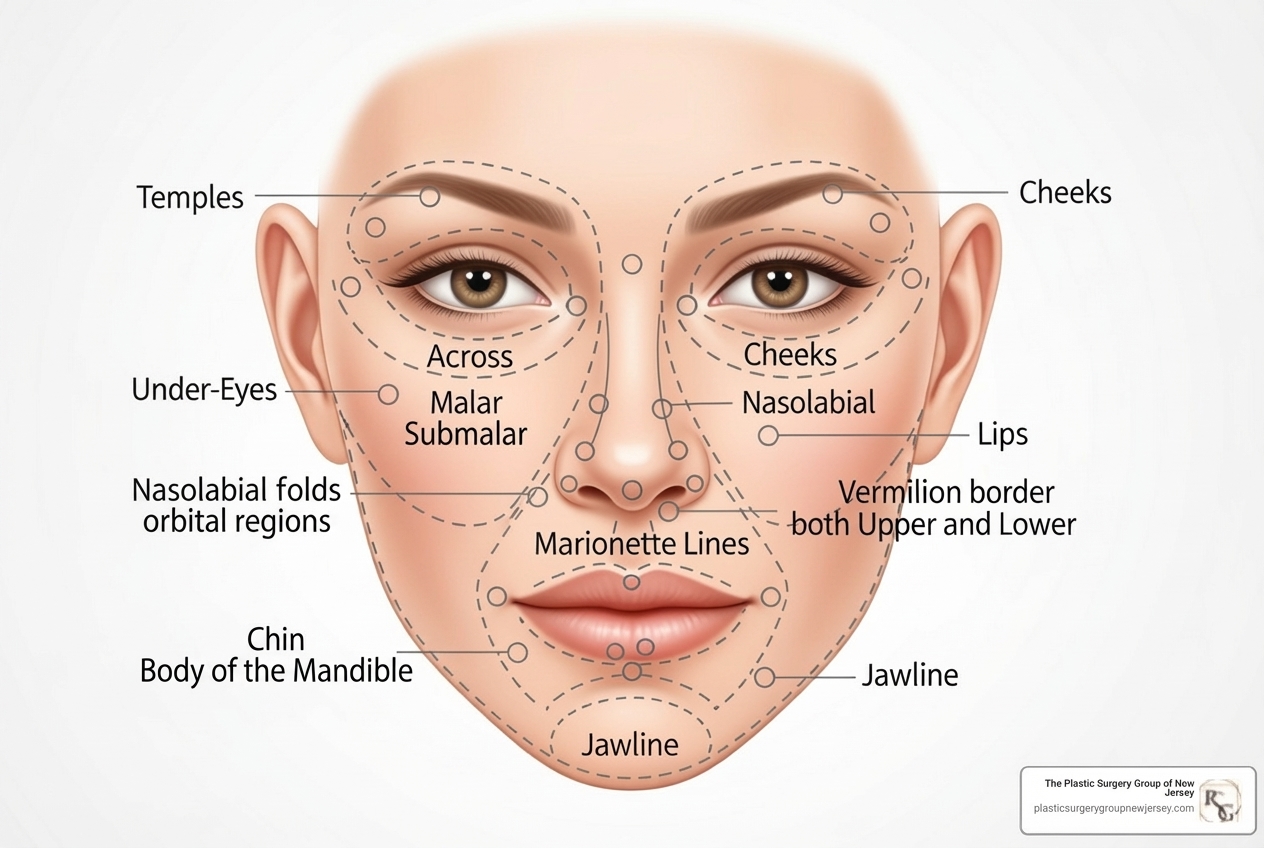
Here are some of the most common areas we treat:
- Hollow Temples: Restores fullness to counter a gaunt or skeletal appearance.
- Under-Eye Bags (Tear Troughs): Fills hollows and smooths the transition from the lower eyelid to the cheek, reducing shadows.
- Sunken Cheeks: Replenishes mid-face volume, lifting and contouring the cheeks for a more vibrant look.
- Nasolabial Folds: Softens the lines running from the nose to the corners of the mouth.
- Marionette Lines: Smooths the lines extending downwards from the corners of the mouth.
- Lip Augmentation: Provides a natural and long-lasting way to improve lip volume and definition.
- Jawline Contouring: Improves definition and reduces the appearance of jowls for a stronger jawline.
- Scar Revision: Softens and camouflages indented scars, such as those from acne or trauma.
Benefits vs. Risks: Is This Procedure Right for You?
Deciding on facial fat grafting requires careful consideration of its benefits and risks. We prioritize patient safety and realistic expectations, providing thorough information to help you make an informed decision. While generally safe when performed by a qualified surgeon, understanding both sides is key to a successful outcome. For a scientific perspective, you can review this scientific review on the safety of fat grafting.
Primary Benefits of Using Your Own Fat
Choosing facial fat grafting offers several unique advantages:
- Natural-looking results: Uses your own tissue for a soft, natural look and feel that seamlessly integrates with your features.
- Long-lasting to permanent solution: Surviving fat cells are permanent, with results often lasting 5-7 years or more—far longer than temporary fillers.
- Dual benefit of body contouring: Slims the donor area (like the abdomen or thighs) while enhancing facial volume. It’s a win-win, especially for those considering body contouring procedures.
- Improved skin quality: The transferred fat contains stem cells and growth factors that can improve skin texture, elasticity, and radiance by stimulating collagen.
- Low risk of allergic reaction: Using your own fat eliminates the risk of allergic reaction or rejection common with synthetic materials.
Potential Risks and How They Are Minimised
While safe when performed by an experienced, board-certified plastic surgeon, it’s important to be aware of potential risks.
Common side effects during recovery include:
- Swelling and bruising: Normal at both sites, typically subsiding within two weeks. We provide guidance on management.
- Fat reabsorption: Not all fat survives; 35% to 65% typically remains long-term. We account for this by slightly overcorrecting during the procedure.
- Mild discomfort: Soreness at the donor and injection sites is manageable with prescribed medication.
Less common complications, minimized by an expert surgeon, include:
- Asymmetry
- Infection
- Lumps or contour irregularities
- Fat necrosis or oil cysts
Severe complications are extremely rare but are carefully avoided through our deep understanding of facial anatomy and meticulous injection techniques. The importance of surgeon technique cannot be overstated in minimizing all potential risks.
Who is an Ideal Candidate?
Ideal candidates for facial fat grafting are individuals who:
- Are in good overall health and free from conditions that could impair healing.
- Are a non-smoker, as smoking compromises blood flow and fat graft survival.
- Have sufficient donor fat on the abdomen, thighs, or flanks for harvesting.
- Show signs of facial volume loss, such as hollow cheeks, temples, or under-eye troughs.
- Are at a stable weight, as significant fluctuations can alter results. This is important for those considering plastic surgery after weight loss.
- Have realistic expectations about the procedure, recovery, and outcomes.
Contraindications include very thin patients with insufficient donor fat, active infections, or certain bleeding disorders and serious medical conditions. We will thoroughly review your medical history during your consultation to ensure the procedure is a safe and effective option for you.
The Patient Journey: Cost, Recovery, and Results
Understanding the practical aspects of facial fat grafting—from cost to recovery and results—is a vital part of your journey. We’re here to guide you through every step.
What is the Typical Cost of Facial Fat Grafting?
The cost of facial fat grafting generally ranges from $5,000 to $8,000 or more, but varies based on several factors:
- Surgeon’s expertise and experience: Fees for highly experienced, board-certified surgeons reflect their skill and proven results.
- Geographic location: Costs vary by region, with metropolitan areas like Montclair, NJ, or New York City often at the higher end.
- Anesthesia and facility fees: These depend on the type of anesthesia used and the accredited surgical facility.
- Extent of the procedure: The amount of fat transferred and the number of areas treated will impact the final cost.
We provide a detailed, transparent cost breakdown during your consultation at our New Jersey office.
The Recovery Process: What to Expect
Recovery involves healing at both the donor and facial sites. Here is a general timeline:
- Initial downtime (1-2 weeks): Expect swelling, bruising, and mild discomfort at both sites. Facial swelling is most noticeable in the first few days and gradually subsides.
- Managing symptoms: We will provide instructions, such as keeping your head liftd, to manage swelling.
- Following instructions: Adhering to all post-operative guidelines, including avoiding pressure on the face and refraining from strenuous activity, is crucial for graft survival.
- Final results (3-6 months): While most swelling resolves in two weeks, it takes three to six months for the transferred fat to settle and for final results to become fully apparent.
Most patients return to work within a week, depending on their comfort level.
Longevity of Facial Fat Grafting Results
A key benefit of facial fat grafting is the longevity of its results.
- Fat survival rate: While some reabsorption is normal (about 65% in the first few months), approximately 35% to 65% of the injected fat cells typically survive long-term. We account for this by slightly overcorrecting during the procedure.
- Permanent results: Surviving fat cells are permanent. They behave like any other fat cell in your body and will respond to future weight changes.
- Maintaining a stable weight: To preserve your results, it’s best to maintain a stable weight, as significant fluctuations can cause the grafted cells to shrink or expand.
- Longevity: Patients often enjoy their results for 5-7 years or even longer, making it a durable solution for facial rejuvenation. Touch-up procedures are possible if desired in the future.
Maximizing Success: Surgeon Choice, Aftercare, and Advanced Facial Fat Grafting Techniques
Outstanding results from facial fat grafting depend on two key factors: your surgeon’s expertise and your commitment to aftercare. The field is also constantly evolving with new techniques to improve outcomes. For those interested, you can review modern fat grafting techniques research to see how the science is progressing.
The Critical Role of Your Surgeon’s Experience
The success of facial fat grafting is profoundly influenced by your surgeon’s skill and artistic vision. Here’s why choosing an expert is critical:
- Board-certified plastic surgeon: Always choose a surgeon certified by the American Board of Plastic Surgery (ABPS), like our surgeons Dr. Rosen and Dr. Ablaza. This ensures rigorous training and the highest safety standards.
- Artistic eye: A skilled surgeon uses an artistic eye to place fat strategically, creating natural improvement rather than an overfilled look.
- Deep understanding of facial anatomy: Intimate knowledge of the face’s complex structures is essential for safety and optimal results, as detailed in studies on the anatomy of the aging face.
- Importance of technique for fat survival: The surgeon’s methods for harvesting, processing, and injecting fat directly impact its survival rate.
- Reviewing before-and-after photos: A surgeon’s portfolio demonstrates their skill. We encourage you to review our gallery and use 3D imaging for planning to visualize potential results.
Choosing an experienced, board-certified plastic surgeon is the most important decision you’ll make in your facial fat grafting journey.
Post-Operative Care and Lifestyle Factors
Your commitment to aftercare and a healthy lifestyle is crucial for maximizing fat graft survival and ensuring the best long-term results.
- Following surgeon’s instructions: Adhere to all guidelines on wound care, medication, and activity.
- Sleeping position: Sleep on your back with your head liftd for the first few weeks to reduce swelling and avoid pressure on the grafts.
- Avoiding pressure on treated areas: Do not apply pressure or massage the face for at least six weeks to allow the fat to establish a blood supply.
- Healthy diet and hydration: A balanced diet and plenty of water support healing.
- No smoking: Abstain from all nicotine products before and after surgery, as smoking severely reduces fat graft survival.
- Sun protection: Use high-SPF sunscreen to protect healing skin.
- Maintaining a stable weight: Keeping your weight stable helps preserve your long-term results.
Bringing It All Together
Facial fat grafting stands out as a truly transformative and natural solution for facial rejuvenation. We’ve explored how this innovative procedure harnesses your body’s own resources to restore youthful volume, smooth away wrinkles, and improve contours with remarkable precision and artistry. From the careful harvesting of fat to its meticulous purification and strategic injection, every step is designed to deliver harmonious and enduring results.
The primary benefits are clear: natural-looking outcomes, a long-lasting to potentially permanent solution for volume loss, the added bonus of body contouring from the donor site, and even improved skin quality thanks to the regenerative properties of adipose-derived stem cells. While, like any surgical procedure, there are potential risks, these are significantly minimized through the expertise of a board-certified plastic surgeon and diligent post-operative care.
For individuals seeking a powerful anti-aging solution that feels entirely authentic, facial fat grafting offers an unparalleled opportunity. It’s about more than just looking younger; it’s about restoring confidence and revealing a refreshed version of yourself that aligns with how you feel inside.
At The Plastic Surgery Group in Montclair, NJ, our highly regarded, experienced plastic surgeons, Dr. Rosen and Dr. Ablaza, are dedicated to providing state-of-the-art care and delivering natural, beautiful results. We invite you to find how facial fat grafting can open up your youthful radiance.
Ready to explore how facial fat grafting can refresh your appearance? We’re here to answer all your questions and help you determine if this procedure is right for you.
Schedule your consultation for cosmetic enhancements with our expert team at The Plastic Surgery Group of New Jersey today.


