
What Before After Photos Really Show About Body Contouring Results
Before after photos are real patient images taken before and after a cosmetic procedure to show how results look in practice.
Here are the most important things to know at a glance:
- They show actual outcomes — not simulations or stock images
- They help set realistic expectations before committing to a procedure
- Quality galleries are organized by procedure (tummy tuck, liposuction, breast augmentation, etc.)
- Reputable surgeons use standardized lighting and angles so comparisons are fair
- Results vary based on age, body type, skin elasticity, and surgeon skill
- ASPS-verified photos come from board-certified plastic surgeons with confirmed credentials
Choosing a cosmetic procedure is a big decision. And for most people in New Jersey considering body contouring, the first question is simple: What will I actually look like?
That’s exactly what before after photos are for. They give you real, visual proof of what a procedure can achieve — for real patients, with real bodies, under real surgical conditions. But not all photo galleries are created equal. Knowing how to find, read, and evaluate them is the difference between walking into a consultation with confidence and walking in with unrealistic expectations.
I’m Dr. Allen Rosen, a board-certified plastic surgeon and founding partner of The Plastic Surgery Group of New Jersey, recognized for over two decades as one of America’s top plastic surgeons by peer surveys and national media. I’ve helped countless patients use before after photos as a meaningful tool in their decision-making process — not just as inspiration, but as an honest, informed starting point for their transformation.

Before after photos terms to learn:
Why Before After Photos Are Essential for Your Journey
When you begin your aesthetic journey, the sheer volume of information can be overwhelming. Before after photos serve as the bridge between clinical descriptions and visual reality. They allow you to visualize potential outcomes in a way that words simply cannot. By evaluating actual before and after plastic surgery photographs, you aren’t just looking at “pretty pictures”; you are reviewing a surgeon’s portfolio and their specific aesthetic eye.
Every surgeon has a “signature” style. Some prefer a very dramatic, high-definition look, while we at The Plastic Surgery Group of New Jersey focus on delivering natural, harmonious results that respect the patient’s original anatomy. Seeing a gallery of body procedures helps you determine if our artistic vision aligns with your personal goals.
Furthermore, these photos are vital for patient safety and procedure selection. They help you understand what is surgically possible. If you are looking at a patient who has a similar “before” body type to yours, their “after” photo provides a realistic benchmark. This prevents the common mistake of chasing an outcome that is anatomically impossible for your frame, ensuring you enter the operating room with a healthy, achievable goal.
How to Evaluate the Quality of Before After Photos
In the age of social media filters and “Facetune,” discerning the truth in photography has never been more important. To reliably use before after photos to select a surgeon, you must look for consistency. Reputable medical photography should look like a clinical record, not a glamorous advertisement.
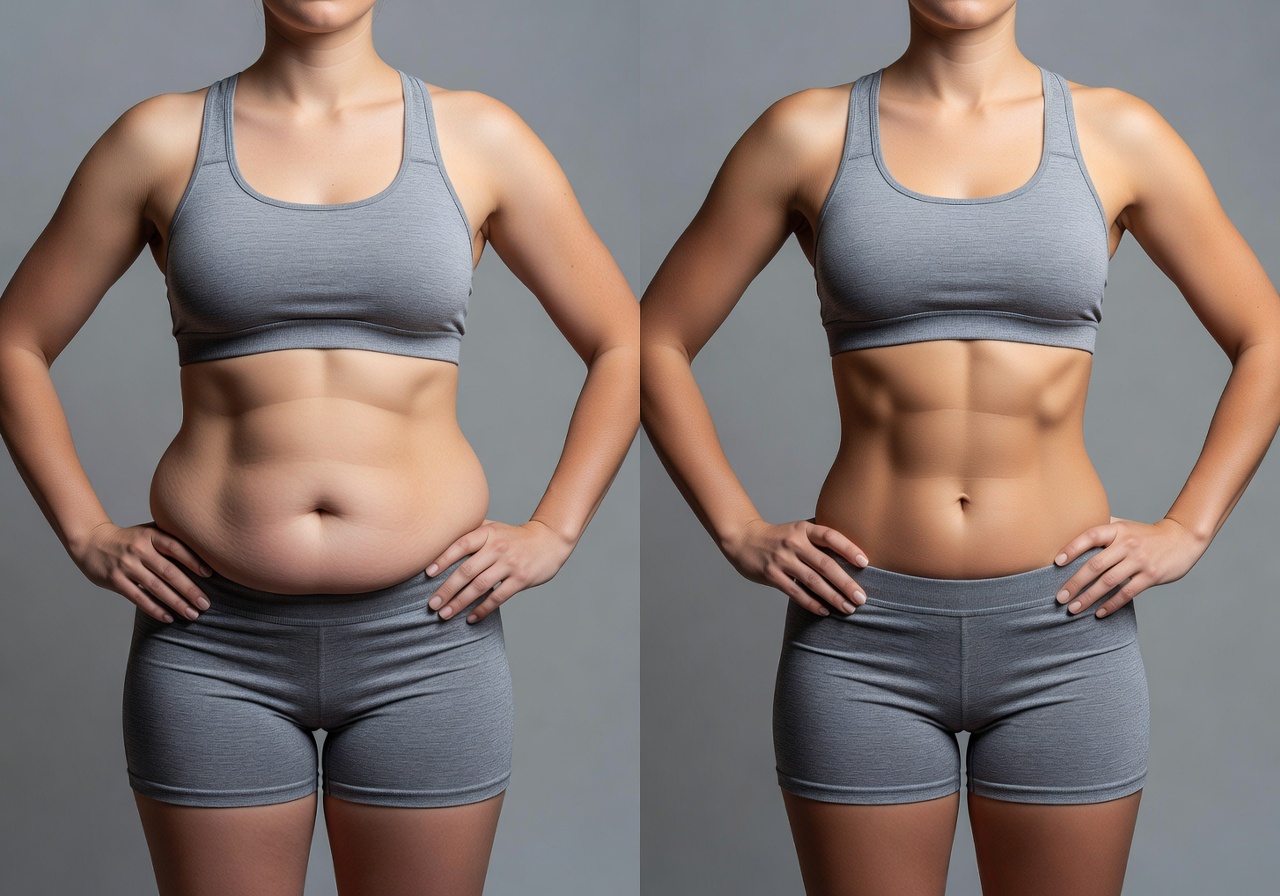
When browsing a gallery, look for these markers of authenticity:
- Consistency in Lighting: The shadows and highlights should be identical in both shots. If the “before” photo is dimly lit and the “after” photo is bright and glowing, the surgeon might be using lighting to hide imperfections.
- Standardized Angles: Patients should be standing in the same position—front view, profile, and three-quarter view—in both sets of images.
- Backgrounds: A neutral, professional background (usually blue, grey, or white) indicates the photos were taken in a controlled clinical environment.
- ASPS Standards: Organizations like the American Society of Plastic Surgeons (ASPS) provide guidelines to ensure galleries are ethical and representative of typical results.
| Feature | Professional Medical Gallery | Misleading Social Media Photo |
|---|---|---|
| Posing | Relaxed, standardized clinical poses | Strategic “sucking in” or arched back |
| Clothing | Standardized medical garments or similar underwear | High-waisted leggings or shapewear in “after” |
| Lighting | Flat, overhead clinical lighting | Soft “beauty” filters or ring lights |
| Editing | No digital alteration of the body | Blurred skin or warped background lines |
Top Procedures with the Most Dramatic Transformations
While every procedure offers improvement, certain body contouring surgeries provide particularly striking visual changes in before after photos. These are often the procedures where skin laxity or significant volume shifts are addressed.
Mommy Makeover
A Mommy Makeover is a combination of procedures—typically a tummy tuck and breast surgery—designed to restore a woman’s body after childbirth. The transformations in these galleries are often the most profound because they address multiple areas of the torso simultaneously, restoring a youthful silhouette that exercise alone cannot achieve.
Tummy Tuck (Abdominoplasty)
For those dealing with “apron” skin or muscle separation (diastasis recti), Tummy Tuck transformations are life-changing. You will see the removal of excess skin and the tightening of the abdominal wall, resulting in a flatter, firmer midsection.
Liposuction
Liposuction contouring is about refinement. In these photos, look at the “edges” of the body—the waistline, the outer thighs, or the neck. The goal here isn’t weight loss, but the removal of stubborn fat pockets to create a more athletic or feminine shape.
Breast Augmentation
Breast Augmentation results show how implants can restore lost volume or create better symmetry. When viewing these, pay attention to the “cleavage” and the “side profile” to see how the implant sits naturally on the chest wall.
Surgical vs. Non-Surgical Before After Photos
It is important to manage expectations when comparing surgical results to non-surgical treatments like CoolSculpting or BodyTite. While non-surgical galleries show impressive “nudges” in the right direction—such as subtle fat reduction or minor skin tightening—they rarely match the dramatic “overhaul” seen in surgical photos. Surgery remains the gold standard for removing large amounts of skin or fat, while non-surgical options are best for patients who are already near their goal and want to avoid downtime.
Factors That Influence Your Final Results
When you look at before after photos, you aren’t just seeing a surgeon’s skill; you’re seeing a biological response to surgery. Several factors determine why one patient’s “after” looks different from another’s.
- Age and Skin Elasticity: Younger skin typically “snaps back” better after liposuction. As we age, we may need more invasive skin-tightening procedures (like a tummy tuck) to achieve the same smooth look.
- Body Mass Index (BMI): Patients who are at a stable, healthy weight before surgery generally see the most defined results.
- Surgeon Expertise: This is the variable you can control. Choosing board-certified surgeons like Dr. Rosen and Dr. Ablaza ensures that the technical execution of the surgery is handled with the highest level of precision.
- Technology: We utilize 3D imaging technology during consultations. This allows us to create a digital “after” photo based on your specific anatomy, which is often more helpful than looking at other patients’ photos.
Interpreting Before After Photos Based on Your Body Type
One of the biggest mistakes patients make is looking at a photo of someone with a completely different bone structure and expecting the same result. If you have a wide pelvic bone, a tummy tuck will make your stomach flat, but it won’t give you a “wasp waist” if your anatomy doesn’t support it.
Scientific research on plastic surgery outcomes emphasizes that patient-to-patient variability is the rule, not the exception. We encourage you to look for patients in our gallery who share your height, weight, and “problem areas” to get the most accurate sense of what we can do for you.
Frequently Asked Questions about Cosmetic Results
How soon after surgery are “after” photos typically taken?
Most “after” photos in a professional gallery are taken between 3 and 6 months post-op. This allows the initial swelling to subside and the tissues to settle. However, final results—especially for scars—can take up to a full year to mature. If you see an “after” photo that looks red or slightly swollen, it was likely taken early in the healing process.
Are before and after photos retouched or filtered?
In a reputable medical practice, absolutely not. Retouching photos is considered unethical and misleading. The goal of before after photos is to provide an honest representation of surgical outcomes. We want you to see the real skin texture, the real surgical scars, and the real contours.
Can I see photos of patients with my specific body type during a consultation?
Yes! In fact, we encourage it. While our website gallery is a great starting point, we have a much more extensive collection of photos in our Montclair office. During your consultation with Dr. Rosen or Dr. Ablaza, we can pull up cases that specifically mirror your anatomy, age, and goals to give you the clearest possible picture of your journey.
Your Next Step Toward Picture-Perfect Results
At The Plastic Surgery Group of New Jersey, we believe that transparency is the foundation of a successful transformation. Before after photos are more than just a marketing tool; they are a testament to our commitment to excellence and our patients’ incredible journeys.
Whether you are visiting us from Livingston, Manhattan, or right here in Montclair, our goal remains the same: to provide natural, beautiful results that make you feel like the best version of yourself. With the board-certified expertise of Dr. Rosen and Dr. Ablaza and our state-of-the-art facility, you are in the best possible hands.
Ready to see what is possible for your own body? Start your transformation today by scheduling a consultation and let us help you create your own “after” photo.


