
Anatomy of a Wide Nose: Why Proportions Matter
When we discuss a “wide nose,” we aren’t just looking at one single structure. The nose is a complex architecture of bone, cartilage, and soft tissue. To achieve a successful result with rhinoplasty for wide nose, we must first identify which specific components are contributing to the breadth.
The nasal structure is generally divided into thirds:
- The Upper Third: This consists of the nasal bones. If these bones are set far apart where they meet the face, the bridge appears broad or flat.
- The Midvault: This area is made of the upper lateral cartilages. Width here can make the middle of the nose look “washed out” in photos.
- The Lower Third: This includes the nasal tip and the nostrils (alar base). A wide tip is often called “bulbous” or “boxy,” while wide nostrils are often referred to as “flared.”
Skin thickness also plays a massive role. Patients with thicker skin may have underlying structures that are perfectly narrow, but the skin “pads” the area, making it look wider. Understanding these nuances is the first step for anyone thinking, “What to Do If I Hate My Nose.” At our New Jersey and New York City locations, we perform a deep structural assessment to ensure we are moving the right pieces of the puzzle.
Subjectivity and the Golden Ratio
Is a nose ever “too wide”? In plastic surgery, width is often subjective, but we use objective guidelines like the Golden Ratio and facial fifths to help. Ideally, the width of the nasal base should be approximately equal to the distance between the inner corners of the eyes (the intercanthal distance).
However, cultural factors and ethnic genetics are vital considerations. Our goal isn’t to create a “cookie-cutter” nose that looks the same on everyone. We aim for aesthetic balance that respects your heritage while refining the features that make you feel self-conscious.
Common Causes of Nasal Width
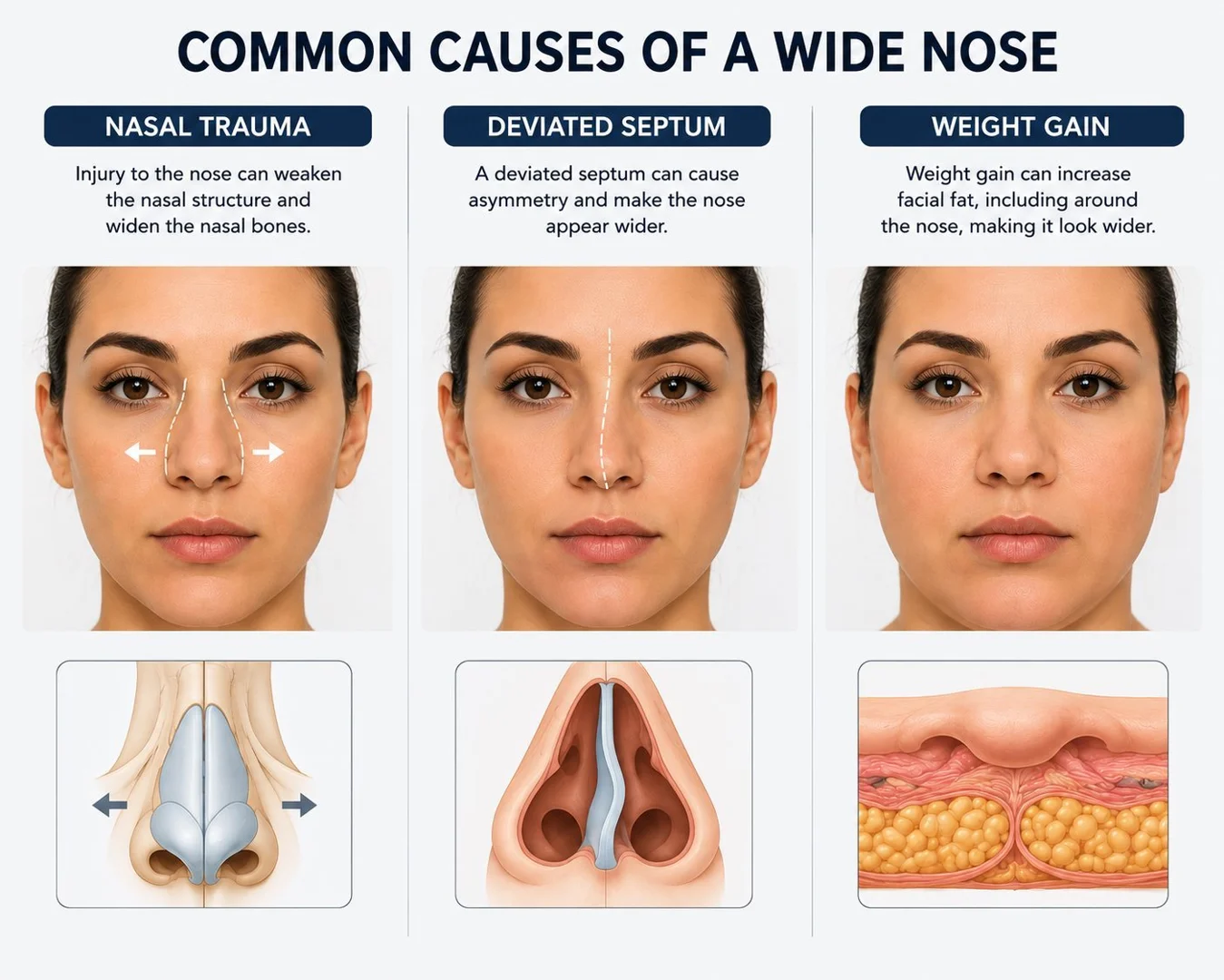
Most wide noses are simply a result of genetic structure—you were born with a broad nasal pyramid or flared nostrils. However, other factors can contribute:
- Nasal Trauma: A past break that didn’t heal correctly can leave the nasal bones splayed outward.
- Deviated Septum: If the internal wall of the nose is severely crooked, it can push the external structures outward, creating an asymmetric or wide appearance.
- Weight Gain: While the nose doesn’t have fat cells that grow significantly, a fuller face can change the proportions and make a bridge appear flatter or wider than it truly is.
Advanced Surgical Techniques for Rhinoplasty for Wide Nose
Narrowing a nose is a game of millimeters. Because we are often reducing the “footprint” of the nose on the face, we use specialized techniques to ensure the result is stable and looks natural.
The most common technique for narrowing the bridge is the osteotomy. This involves making precise, controlled cuts in the nasal bones to allow them to be moved inward. Think of it like bringing the walls of a tent closer together to make the peak higher and the base narrower. In April 2026, many surgeons (including us) utilize ultrasonic or “piezo” technology, which uses sound vibrations to sculpt bone with much less trauma to the surrounding soft tissue than traditional tools. This advanced approach is often discussed by the American Society of Plastic Surgeons for its precision in bone reshaping.
When deciding on an approach, we choose between Open and Closed techniques based on the complexity of your anatomy.
| Feature | Open Rhinoplasty | Closed Rhinoplasty |
|---|---|---|
| Incision | Small incision across the columella (skin between nostrils) | All incisions are hidden inside the nostrils |
| Visibility | Provides a full “hood-up” view of the structure | Limited visibility; done “blind” or with endoscopes |
| Best For | Complex reshaping, bulbous tips, and major narrowing | Minor bridge narrowing or small hump removals |
| Scarring | A tiny, usually invisible scar on the bottom | No external scarring |
For more details on how we tailor these approaches, visit our page on Rhinoplasty Services at The Plastic Surgery Group of New Jersey.
Refining the Bulbous Tip in Rhinoplasty for Wide Nose
A wide tip can make the entire nose look “bottom-heavy.” To fix this, we perform what is often called a “tiplasty.” This involves:
- Cephalic Trim: Removing a small, conservative portion of the upper edge of the tip cartilages (lower lateral cartilages).
- Suture Techniques: Using permanent stitches to “cinch” the cartilages together, bringing two wide domes into a single, refined point.
- Columellar Strut: Adding a small piece of cartilage (usually from the septum) to act as a “tent pole,” giving the tip better projection and preventing it from drooping.
Alar Base Reduction for Wide Nostrils
If the bridge is narrow but the nostrils flare out toward the cheeks, we perform an alarplasty or alar base reduction. This involves removing a small wedge of tissue (a wedge resection) from where the nostril meets the cheek or from the “sill” (the floor of the nostril). By removing this tiny piece of skin and suturing the area back together, we can significantly narrow the nasal base. We take great care to hide these incisions in the natural creases of the face so they are virtually undetectable once healed.

The Recovery Journey: Healing and Long-Term Results
The most common question we get at our Montclair and Manhattan offices is: “When will I look normal again?” While every patient heals differently, there is a predictable timeline for rhinoplasty for wide nose recovery.
Recovery Milestones for Rhinoplasty for Wide Nose
- Days 1–3: This is the peak of swelling and “stuffiness.” You’ll likely have a plastic or plaster splint on the bridge of your nose.
- Day 7: The “Big Reveal.” We remove the splint and any external sutures. While the nose is still swollen, you can see the new, narrower shape.
- Day 10–14: Most bruising has faded. Most of our patients return to work or school at this point.
- 1 Month: About 70% of the swelling is gone. You can resume light exercise.
- 12 Months: The final 10% of swelling—usually in the tip—finally dissipates. This is your “forever” nose.
You can see the progression of these stages in our Rhinoplasty Before and After Gallery.
Realistic Expectations and Permanence
It is important to remember that “perfect” is the enemy of “great.” The goal of rhinoplasty for wide nose is improvement and harmony. Statistics show that:
- 85% of patients report a significant boost in social confidence.
- 92% of patients report improved breathing if functional work was done.
- 78% of patients feel their face looks more “symmetrical” overall.
Because we are changing the bone and cartilage, the results are permanent. However, the nose is still subject to the normal effects of aging. Over several decades, the skin may thin or the tip may slightly descend, but the narrowed bridge and refined tip structure will remain.

Frequently Asked Questions About Wide Nose Surgery
How much does wide nose rhinoplasty cost in 2026?
In 2026, the average cost for a rhinoplasty for wide nose in the New Jersey and New York City area typically ranges from $10,500 to $20,000. A standard estimate often lands around $15,500.
Why the wide range? The total price includes:
- Surgeon’s Fee: Based on the complexity of the narrowing required.
- Anesthesia Fees: Usually billed by the hour.
- Facility Fees: Our state-of-the-art surgical centers provide a safe, accredited environment.
- Specialized Tools: The use of Piezo ultrasonic technology may add a small premium due to the advanced equipment involved.
If you are only having an alarplasty (nostril reduction) without bone work, the cost is significantly lower, often between $6,000 and $9,000.
Can a wide nose be narrowed without surgery?
You may have seen “liquid rhinoplasty” or makeup contouring tutorials online. While these can help, they have major limitations:
- Makeup: Only creates an optical illusion of a narrower bridge using light and shadow. It doesn’t work in profile or under harsh lighting.
- Fillers: Dermal fillers (like Restylane or Juvederm) add volume. While a surgeon can add filler to the bridge to make it look higher—which can make it appear narrower—it doesn’t actually reduce the width. In fact, adding too much filler can make a nose look “thick” or “puffy.”
Surgery remains the only way to physically move bones and remove tissue for a truly narrower result.
Will narrowing my nose make it harder to breathe?
This is a critical concern. If a surgeon narrows the nose too much without considering the internal airway, it can cause the “internal nasal valve” to collapse.
To prevent this, we often use spreader grafts. These are tiny strips of cartilage placed like “rafters” in the roof of the nose to keep the airway open while we narrow the external bridge. We often perform a septoplasty at the same time to ensure the internal “wall” is straight, giving you a nose that looks better and breathes better.
Bringing It All Into Balance
Narrowing a wide nasal bridge is as much an art as it is a science. It requires a deep understanding of facial harmony, a mastery of surgical techniques like osteotomies and alarplasties, and a commitment to preserving the patient’s ability to breathe.
At The Plastic Surgery Group of New Jersey, Dr. Rosen and Dr. Ablaza specialize in delivering natural-looking results that never look “operated on.” Whether you are looking to refine a bulbous tip or narrow a broad bridge, our team is here to guide you through a personalized transformation.
If you are ready to see how a more balanced profile can change your outlook, Schedule your wide nose rhinoplasty consultation today. We look forward to meeting you at our Montclair, Livingston, or Manhattan locations.


