
What Is Ear Gauge Repair — and Can Your Stretched Earlobes Be Fixed?
Ear gauge repair is a minor surgical procedure that reconstructs earlobes stretched or distorted by gauging, restoring them to a natural shape and size.
Here’s what you need to know upfront:
- Who it’s for: Anyone with stretched earlobes that won’t close on their own after removing gauges
- How it works: A surgeon removes excess skin, reshapes the tissue, and closes the earlobe with fine sutures — all under local anesthesia
- How long it takes: About 30–60 minutes, performed as an outpatient procedure
- Recovery: Sutures come out in 7–10 days; most people return to daily routines within 1–2 days
- Re-piercing: Possible after 6 months of healing
- Cost: Typically not covered by insurance, as it is considered a cosmetic procedure
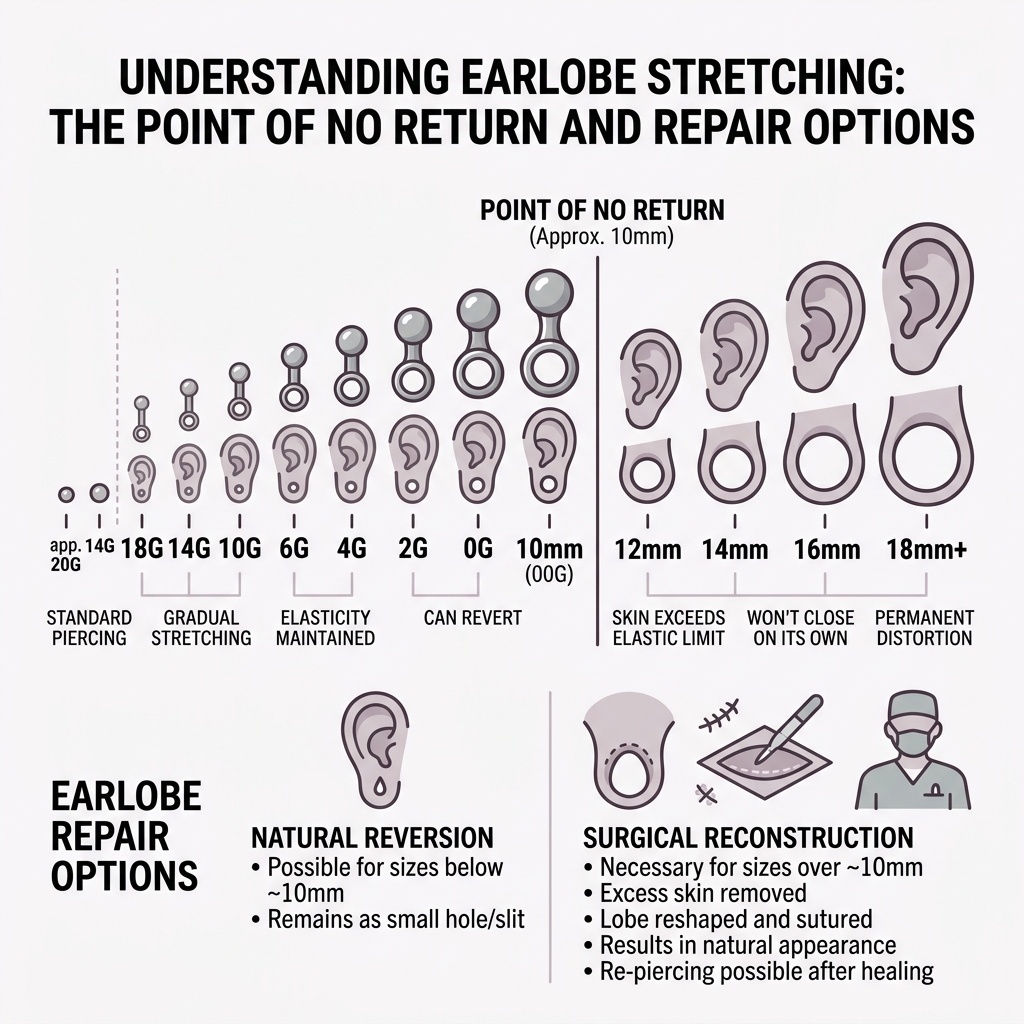
- The key threshold: Once stretching exceeds roughly 10mm, the earlobe will not close on its own — surgery is the only reliable fix
Stretched earlobes from gauging are more common than you might think, and they don’t have to be permanent. Whether you’ve had a change in lifestyle, career, or simply a change of heart, surgical reconstruction offers a clean, lasting solution.
At The Plastic Surgery Group of New Jersey, our fellowship-trained plastic and reconstructive surgeons, Dr. Rosen and Dr. Ablaza, have advanced training in facial aesthetic surgery — including ear gauge repair procedures. In this guide, we’ll walk you through everything you need to know, from how the surgery works to what your recovery will look like.
Understanding Ear Gauge Repair Surgery
In body modification, ear gauging is a journey of patience. You start small and gradually increase the size of your jewelry, using expanders to slowly stretch the skin. However, there is a biological limit to how much that skin can “bounce back.” This is where ear gauge repair, medically known as a complex lobuloplasty, comes into play.
When you stretch your earlobe, you aren’t just stretching the skin; you are expanding the underlying areolar and adipose tissues. Unlike the upper part of your ear, the lobe contains no cartilage, making it highly pliable but also prone to permanent distortion. Research indicates that the “point of no return” is generally around 10mm (roughly 00 gauge). Beyond this size, the hole is unlikely to close to a standard piercing size on its own because the skin has been stretched past its elastic limit and new skin has grown into the “track” of the piercing.
At The Plastic Surgery Group of New Jersey, we see many patients who have reached this threshold. If you’re interested in how we handle these cases, you can find More info about earlobe repair services on our dedicated procedure page. For those interested in the clinical side of how these dilated lobes are managed, the Repair of the Dilated Earlobe After Ear Gauging provides a deep dive into the dermatologic surgical approach.
Why People Seek Ear Gauge Repair
The reasons for seeking ear gauge repair are as unique as the individuals themselves. Often, it’s a matter of professional evolution. A look that felt right in your twenties might not align with a new career path in a conservative office environment or a desire to join the military.
Other common reasons include:
- Social Stigma: Unfortunately, some people feel that large gauges draw unwanted attention or lead to snap judgments in social settings.
- Physical Discomfort: As lobes thin out, they become more susceptible to tearing or feeling “heavy” even without jewelry.
- Aesthetic Balance: Many patients simply want to restore the natural symmetry of their face. If you’ve found yourself feeling self-conscious, our guide on What to Do If You Hate Your Ears offers broader perspective on ear-related confidence.
- Thinning and Sagging: Gravity isn’t always kind. Over time, the bottom bridge of a gauged ear can become dangerously thin, risking an acute traumatic tear.
Candidates for the Procedure
Most people with stretched or torn lobes are excellent candidates for surgery. Ideally, you should be a healthy non-smoker, as nicotine significantly impairs blood flow and can lead to poor wound healing or skin necrosis in the delicate earlobe tissue.
We also look for patients with realistic expectations. While we aim for a near-invisible scar, surgery always leaves a mark; the goal is to trade a large, distracting hole for a faint, manageable line. If you have a history of keloids (thick, raised scars), we will need to discuss specialized techniques to minimize the risk of regrowth. It is also vital that the piercing site is fully healed and free of any active infection before we proceed with Expert Earlobe Repair Surgery.
The Surgical Procedure: What to Expect
Walking into a surgical suite can be nerve-wracking, but ear gauge repair is one of the most straightforward and rewarding procedures we perform. It is almost always done as an outpatient procedure in our state-of-the-art facility in Montclair or our other New Jersey locations.
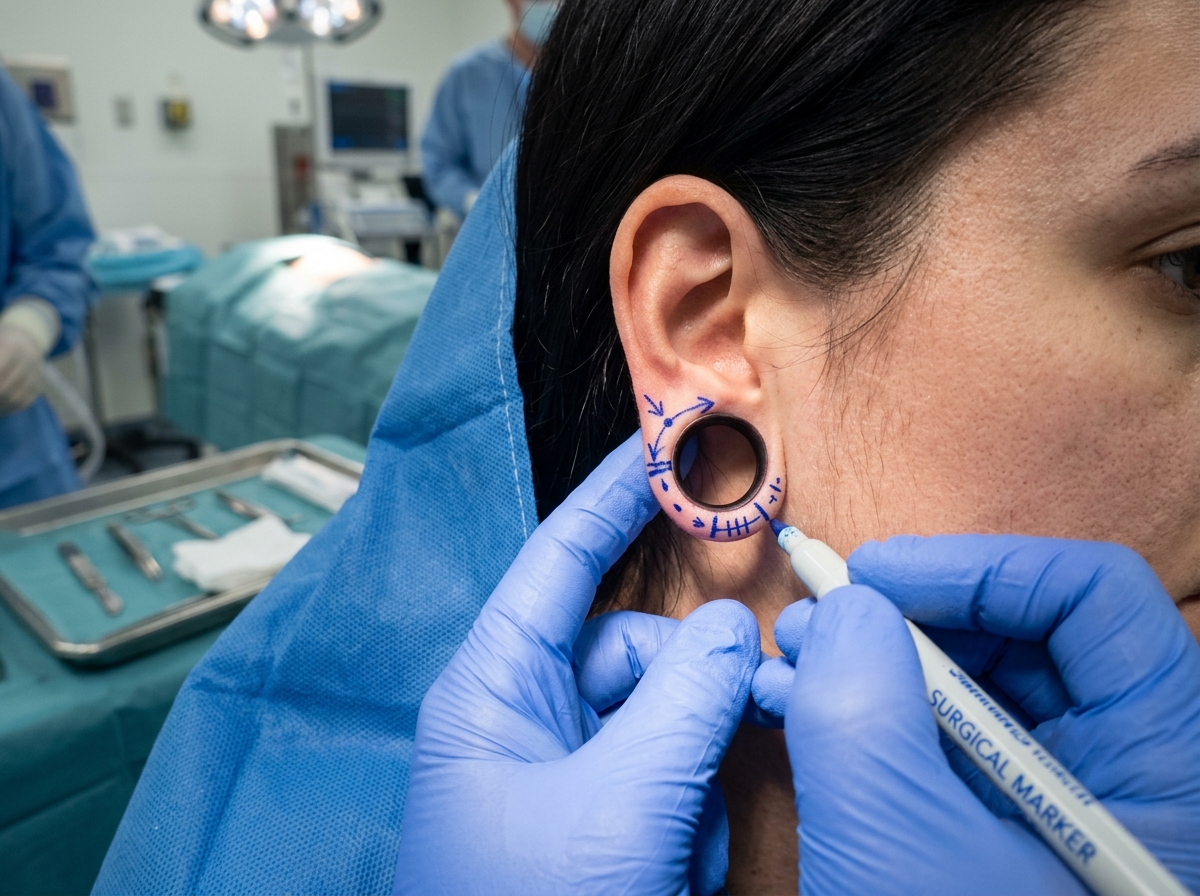
The process begins with careful marking. We don’t just “sew the hole shut”—that would result in a puckered, unnatural shape. Instead, we plan a reconstruction that recruits healthy tissue to recreate a rounded, natural-looking lobe. Once the plan is set, we use a local anesthetic (usually lidocaine with epinephrine) to completely numb the area. You’ll be awake and able to chat with us, but you won’t feel any pain.
| Feature | Simple Split Repair | Complex Gauge Reconstruction |
|---|---|---|
| Primary Cause | Heavy earrings or sudden tear | Intentional stretching (gauging) |
| Procedure Time | 15–20 minutes per ear | 30–60 minutes per ear |
| Technique | Direct closure of a linear tear | Tissue rearrangement/local flaps |
| Complexity | Low | Moderate to High |
| Goal | Close a “split” | Restore volume and circular shape |
The core of the procedure involves “de-epithelialization”—removing the thin layer of skin that has grown inside the hole. By creating “fresh” edges, we allow the tissue to knit back together. For larger gauges, we often use a “local flap” technique, moving tissue from the periphery of the lobe to fill the central gap, ensuring the ear doesn’t look “notched” or too small after the fix.
Preparing for Your Ear Gauge Repair
Preparation is key to a smooth surgery and a beautiful result. We recommend checking out our specific advice on How to Prepare for Ear Surgery Montclair for a comprehensive checklist.
In general, you should:
- Stop Smoking: Ideally, quit at least two weeks before and after surgery.
- Adjust Medications: Avoid blood-thinning supplements like fish oil, Vitamin E, and aspirin for a week prior to reduce bruising.
- Cleanse: Wash your ears and hair thoroughly on the morning of surgery to minimize bacteria.
- Remove Jewelry: Ensure all plugs and tunnels have been out for at least a few weeks to allow the skin to shrink as much as possible naturally.
Advanced Reconstruction Techniques
To achieve the natural, beautiful results our New Jersey patients expect, we employ advanced suturing methods. One of our favorites is the vertical mattress suture. This technique helps “evert” the wound edges (pushing them slightly outward). As the scar matures and contracts over the following months, this eversion prevents the “notching” effect where the bottom of the earlobe looks like it has a tiny V-shaped dent.
We meticulously align the anterior (front) edges and the inferior (bottom) border to ensure the curve of the ear is continuous. For more complex cases, these advanced techniques ensure the earlobe is restored to a natural appearance, differing from standard ear pinning or reshaping.
Recovery and Aftercare for Reconstructed Lobes
Recovery from ear gauge repair is remarkably quick. Most patients report only mild soreness that is easily managed with over-the-counter pain relief like Tylenol.
For the first week, your primary job is wound care. We typically ask patients to:
- Keep it Clean: Gently clean the incision with a dilute hydrogen peroxide solution on a cotton swab once or twice a day.
- Apply Ointment: Keep the area moist with a thin layer of antibiotic ointment (like Bacitracin) to prevent crusting.
- Sleep Elevated: Using an extra pillow for the first 48 hours can help minimize initial swelling.
- Avoid Submersion: No swimming or hot tubs for at least two weeks to prevent infection.
Your sutures will typically be removed in our office about 7 to 10 days after the procedure. At this point, the incision will look like a thin red line, which will continue to fade over the coming months.
Re-piercing After Ear Gauge Repair
One of the most frequent questions we get is: “Can I wear earrings again?” The answer is yes—but you must be patient. We recommend waiting at least 6 months before re-piercing your ears.
Why so long? Scar tissue is never quite as strong as original, uninjured skin. If you pierce too early, or directly through the scar line, the weight of an earring can easily cause the lobe to tear again. When you do get re-pierced, we suggest an “offset” placement—meaning the new hole is at least 3mm away from the surgical scar. And it should go without saying: no more gauging! If you’re not ready for a permanent hole yet, clip-on earrings are usually safe to wear after about 2-3 months.
Long-Term Results and Scar Management
Once the initial healing phase is over, the long-term results of ear gauge repair are permanent. The scars are designed to be inconspicuous, often hiding in the natural shadows of the ear.
To ensure the best aesthetic balance, we suggest:
- Sun Protection: Keep the healing scar covered with SPF 30 or higher for the first year. Sun exposure can cause scars to darken permanently (hyperpigmentation).
- Scar Massage: Once the sutures are out and the skin is closed, gently massaging the lobe with vitamin E oil can help soften the tissue.
- Monitoring: While rare, if you notice the earlobe beginning to stick out or change shape, consult our resources on Protruding Ears – My Ears Stick Out to understand how different ear surgeries can complement one another.
Risks, Costs, and Choosing a Surgeon
While ear gauge repair is safe, no surgery is without risk. Potential complications include infection, minor asymmetry between the two ears, or a “notch” deformity if the healing doesn’t go perfectly. In very rare cases, a keloid might form. However, choosing a board-certified plastic surgeon significantly minimizes these risks.
Choosing Your Surgeon
Don’t trust your face to just anyone. You want a surgeon who specializes in facial plastic surgery and understands the intricate anatomy of the ear. At The Plastic Surgery Group of New Jersey, Dr. Rosen and Dr. Ablaza bring decades of experience to every procedure, ensuring that your results look natural rather than “operated on.”
Frequently Asked Questions about Earlobe Reconstruction
Can gauged ears close without surgery?
It depends on the size. If you never went larger than a 0 gauge (7mm) or perhaps an 8mm, your skin’s natural elasticity might allow the hole to shrink significantly over several months. However, once you pass that 10mm “point of no return,” the internal skin lining is too established to close on its own. Surgery is the only way to remove that internal track and fuse the tissue back together.
Is the ear gauge repair procedure painful?
Not at all! We use a very fine needle to inject a local numbing agent. You might feel a quick “pinch and a burn” for about five seconds, but after that, the entire ear is completely numb. Most patients find the experience much less painful than the original gauging process.
How much does the surgery typically cost?
Because ear gauge repair is considered a cosmetic procedure (elective body modification reversal), it is almost never covered by insurance. The cost varies based on the complexity of the reconstruction and whether you are doing one ear or both. During your consultation, we provide a transparent, all-inclusive quote that covers the facility fee, the surgeon’s fee, and all follow-up visits. We also offer financing options to help make the transformation more accessible.
A Fresh Start for Your Earlobes
Your past style choices don’t have to define your future look. Whether you’re closing your gauges for a new job, a wedding, or simply because you’re ready for a change, ear gauge repair at The Plastic Surgery Group of New Jersey offers a path back to a natural appearance.
Under the expert care of Dr. Rosen and Dr. Ablaza, you can expect a comfortable experience in our state-of-the-art facility and results that help you feel like yourself again. Ready to take the next step? Schedule your ear gauge repair consultation with us today at one of our convenient locations in Montclair, Livingston, or New York City. We look forward to helping you achieve your ultimate body transformation.


