
Is a New Inverted Nipple After Pregnancy Normal — or Something to Worry About?
Noticing an inverted nipple after pregnancy not breastfeeding can feel alarming, especially when you’re not sure what’s causing it. Here’s a quick answer before we dive deeper:
Most common reasons a nipple inverts after pregnancy (without breastfeeding):
- Hormonal shifts — Dramatic changes in estrogen and progesterone after delivery can temporarily alter nipple shape
- Structural tissue changes — Breast tissue stretches and contracts during pregnancy, sometimes pulling the nipple inward
- Milk duct changes — Ducts can expand or become inflamed even if you’re not nursing (a condition called duct ectasia)
- Benign growths — Tiny intraductal papillomas (small, non-cancerous growths) can pull the nipple inward
- Infection or inflammation — Periductal mastitis can cause retraction even without breastfeeding
- Rarely, breast cancer — Sudden, one-sided inversion with other symptoms like skin dimpling, lumps, or discharge warrants prompt medical evaluation
The bottom line: A new inverted nipple after pregnancy is usually benign, but a sudden or one-sided change should always be checked by a doctor.
The good news is that most postpartum nipple changes are temporary or easily treatable. But knowing the difference between a harmless hormonal response and an early warning sign matters — and that’s exactly what this guide covers.
I’m Dr. John A. Cece, a fellowship-trained plastic and reconstructive surgeon specializing in aesthetic breast surgery, with advanced training from the Manhattan Eye, Ear, and Throat Hospital. My experience in breast aesthetics and reconstruction gives me a detailed understanding of postpartum breast changes, including how to evaluate and treat an inverted nipple after pregnancy not breastfeeding. In the sections below, I’ll walk you through everything you need to know — from causes and warning signs to non-surgical and surgical solutions.
Key terms for inverted nipple after pregnancy not breastfeeding:
Understanding Inverted Nipple After Pregnancy Not Breastfeeding
When we talk about an inverted nipple after pregnancy not breastfeeding, we are looking at a complex interplay of anatomy and biology. While many women expect their breasts to change if they are nursing, those who choose not to breastfeed are often surprised by the physical shifts that occur during the postpartum period.
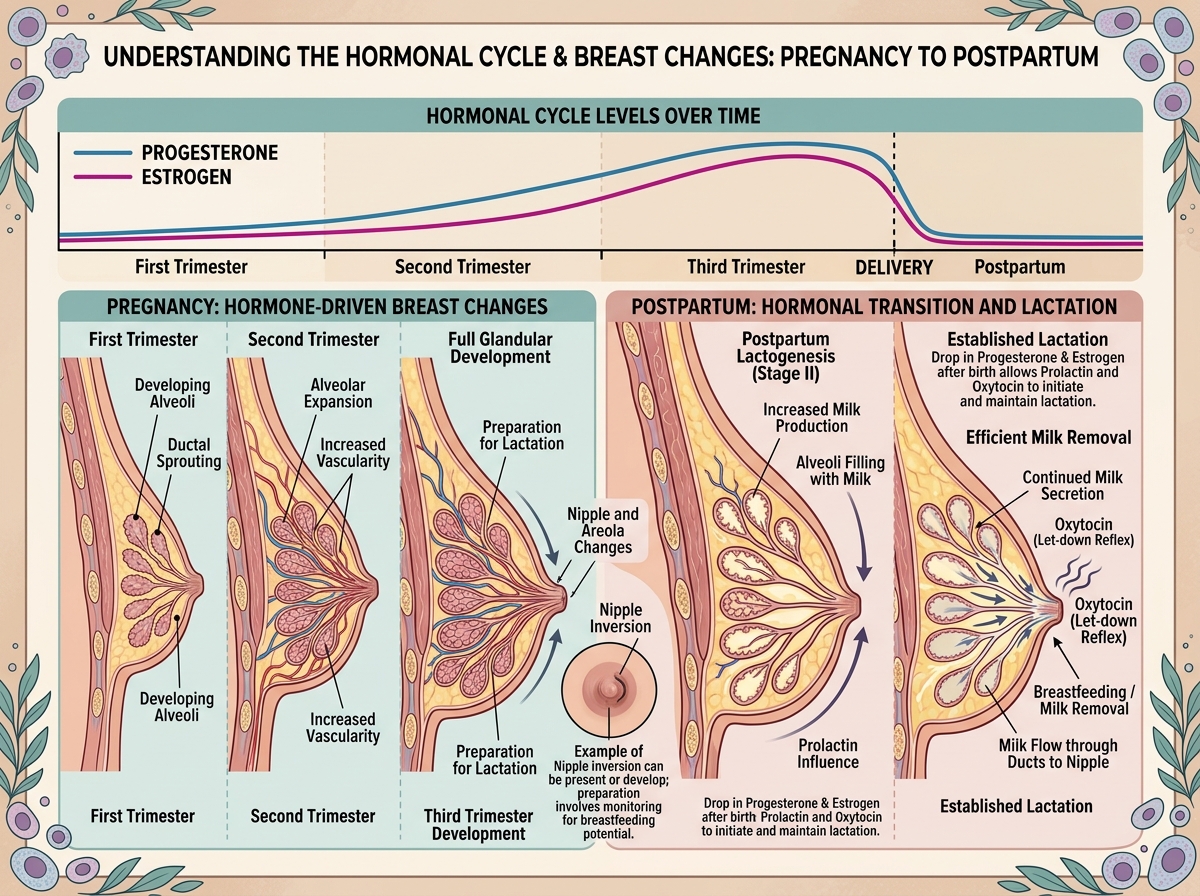
The anatomy of the nipple is supported by a network of milk ducts and fibrous bands called Cooper’s ligaments. During pregnancy, these structures undergo massive transformation. Even if you don’t breastfeed, your body prepares for it by expanding the ductal system and increasing blood flow to the area. When the pregnancy ends and the body begins “involution”—the process of the breast tissue returning to a non-pregnant state—those expanded ducts and stretched ligaments can pull back unevenly.
In some cases, fat necrosis (harmless firm lumps of fatty tissue) can occur due to the rapid change in breast volume, which may also cause the nipple to tether or tilt inward. According to StatPearls: Inverted Nipple Pathophysiology, congenital inversion affects 10-20% of the population, but acquired inversion after pregnancy is a distinct structural event.
Hormonal Triggers for Inverted Nipple After Pregnancy Not Breastfeeding
Hormones are the “conductors” of breast change. During pregnancy, estrogen and progesterone levels skyrocket, causing the glandular tissue to swell. After delivery, these levels crash, while prolactin (the milk-producing hormone) may remain elevated for a short time even if you aren’t nursing.
This “hormonal roller coaster” can cause the milk ducts to remain tense or slightly dilated. This ductal tension can act like a drawstring, pulling the center of the nipple inward. For many of our patients in Montclair, these changes are most noticeable in the first six months postpartum as the endocrine system recalibrates.
Structural Changes and Duct Ectasia
A common but often undiagnosed cause of nipple changes in non-breastfeeding women is mammary duct ectasia. This occurs when a milk duct beneath the nipple widens and thickens, which can lead to fluid collection and subareolar inflammation.
When the duct becomes clogged or scarred, it shortens, pulling the nipple into a “slit-like” or fully inverted position. This is often accompanied by redness or a thick, sticky discharge. It is important to distinguish this from retracted nipples, which may only involve part of the nipple pulling back, whereas true inversion involves the entire nipple tip sinking below the areola level.
Benign vs. Malignant: Identifying Concerning Symptoms
We know that the word “inversion” often brings up fears of breast cancer. While it is true that a newly inverted nipple after pregnancy not breastfeeding can be a symptom of malignancy, it is rarely the only symptom.
In our practice, we look for “red flag” combinations. If the inversion is bilateral (both sides) and has been present since puberty, it is almost certainly benign. However, if the inversion is unilateral (one side only) and appeared suddenly after pregnancy, we take a much closer look.
Cancerous tumors can attach to the milk ducts or the skin, pulling the nipple inward as they grow. One specific type, Paget’s disease of the breast, can cause the nipple to look flattened or inverted while also causing skin changes like scaling or redness that looks like eczema.
When to Seek Immediate Medical Attention
If you notice any of the following along with your nipple inversion, please schedule an evaluation with a specialist immediately:
- Bloody or clear discharge from one nipple (see more about nipple leaking fluid).
- Peau d’orange: Skin that looks like an orange peel (pitted and thickened).
- A persistent lump that doesn’t move with your menstrual cycle.
- Scaling, crusting, or ulceration of the areola.
- Axillary lymphadenopathy: Swollen lymph nodes under the arm.
For more detailed information on identifying these signs, Cancer Research UK: Signs and Symptoms provides excellent resources on what to watch for.
Diagnostic Tests and Evaluation
If you come to see us in Montclair, New Jersey, with a newly inverted nipple, we don’t guess—we test. The diagnostic journey usually involves:
- Clinical Breast Exam: A physical assessment of the tissue and nipple “grade.”
- Mammography: The gold standard for spotting internal structural changes or masses.
- Breast Ultrasound: Excellent for seeing if a “pull” is caused by a fluid-filled duct (ectasia) or a solid mass.
- MRI: Used for more detailed imaging if results are inconclusive.
- Biopsy: If a mass is found, a fine-needle or core needle biopsy can confirm if the tissue is benign or malignant.
Grading the Severity of Postpartum Nipple Inversion
Not all inverted nipples are created equal. In the medical world, we use the Han and Hong scale to grade the severity. This helps us determine if non-surgical methods will work or if a procedure is necessary.
| Grade | Description | Characteristics |
|---|---|---|
| Grade 1 | “Shy” Nipples | Can be pulled out easily with manual pressure; stays out for a while. Minimal fibrosis. |
| Grade 2 | Moderate Inversion | Can be pulled out but retracts almost immediately. More fibrous tissue present. |
| Grade 3 | Severe Inversion | Cannot be pulled out manually. Significant fibrosis and short/atrophied ducts. |
Long-term Outlook for Inverted Nipple After Pregnancy Not Breastfeeding
For many women, a Grade 1 inverted nipple after pregnancy not breastfeeding may resolve spontaneously as hormones level out and tissue inflammation subsides. However, Grade 2 and 3 cases often persist.
Beyond the physical, we understand the psychological impact. Many women feel that their “mommy makeover” isn’t complete if they are unhappy with the appearance of their nipples. It can affect self-confidence and body image, which is a perfectly valid reason to seek correction.
Non-Surgical and Surgical Solutions
If your nipple inversion is bothersome, you have options. We always prefer starting with the least invasive approach for Grade 1 and some Grade 2 cases.
Correcting Inverted Nipple After Pregnancy Not Breastfeeding
Non-Surgical Methods:
- The Hoffman Technique: This involves placing your thumbs at the base of the nipple and pulling them away from each other to break up small adhesions. Learn more about the Hoffman technique for inverted nipple.
- Suction Devices: Products like the Niplette or simple suction cups can be worn inside the bra to gradually stretch the milk ducts.
- Breast Shells: These apply constant, gentle pressure to help the nipple protrude.
Surgical Correction: When non-surgical methods fail, or for Grade 3 inversion, surgery is the most effective permanent solution. A Surgical Correction Review highlights that modern techniques are highly successful with minimal downtime.
Surgical Techniques and Outcomes
At The Plastic Surgery Group of New Jersey, Dr. John A. Cece uses refined techniques to ensure natural results:
- Duct-Preserving Surgery: We carefully release the fibrous bands while keeping the milk ducts intact. This is vital if you plan to breastfeed in the future.
- Duct-Dividing Surgery: For severe cases where the ducts are too short to allow protrusion, we may need to divide them.
- Purse-String Sutures: A tiny internal stitch is used to “hold” the nipple in its new, outward position.
Most procedures are done under local anesthesia and take less than an hour. Recovery is quick—most patients return to work within a day or two, and scarring is virtually invisible as it’s hidden in the natural pigment of the areola.
Frequently Asked Questions about Postpartum Nipple Changes
Can I still breastfeed in the future if my nipples inverted after this pregnancy?
In many cases, yes! Grade 1 and 2 inversions often don’t prevent breastfeeding, though they may make the initial “latch” more difficult. If you choose surgery, opting for a duct-preserving technique is key to maintaining your ability to nurse later.
Is sudden nipple inversion always a sign of cancer?
No. While it is a symptom that must be taken seriously, many benign conditions like duct ectasia, internal scarring from a previous infection, or even a simple “clogged” duct can cause sudden inversion.
How common is it for nipples to change shape after pregnancy without nursing?
It is very common. Between 10-20% of women experience some form of nipple inversion or flattening. Pregnancy causes the breasts to undergo a massive “remodeling” project, and sometimes the finishing touches (like nipple position) don’t land exactly where they started.
What a New Inverted Nipple Could Mean for You
Dealing with an inverted nipple after pregnancy not breastfeeding can be a confusing part of your postpartum journey. Whether your changes are a temporary result of hormonal shifts or a structural issue like duct ectasia, you deserve clarity and confidence in your body.
At The Plastic Surgery Group of New Jersey, we specialize in helping women regain their pre-pregnancy confidence. Our experienced surgeons, Dr. Cece, Dr. Rosen and Dr. Ablaza, provide personalized care in our state-of-the-art facility in Montclair. We focus on delivering natural, beautiful results that help you feel like yourself again.
If you’re ready to discuss your options or simply want the peace of mind that comes with an expert evaluation, we invite you to Schedule an Inverted Nipple Consultation with us today. Your comfort and health are our top priorities.


