
When Heavy Breasts Hold You Back: Finding Breast Reduction Near Me
If you’re searching for breast reduction near me, here’s what you need to know right away:
How to find a qualified breast reduction surgeon in New Jersey:
- Look for a board-certified plastic surgeon (certified by the American Board of Plastic Surgery)
- Schedule a consultation to discuss your symptoms, goals, and insurance options
- Bring documentation of physical symptoms (back pain, rashes, bra strap grooves) to support a possible insurance claim
- Ask about surgical technique options and expected recovery timeline
- The Plastic Surgery Group of New Jersey, located in Montclair, NJ, offers consultations with board-certified plastic surgeons Dr. Allen D. Rosen M.D. and Dr. Valerie J. Ablaza M.D.
Large breasts can cause real, daily discomfort, including chronic back, neck and shoulder pain, skin irritation and difficulty participating in physical activities. Breast reduction remains a commonly performed procedure in the United States. According to the American Society of Plastic Surgeons, 76,040 breast reduction procedures were performed in 2025, representing a 7% increase from the previous year. Many patients pursue breast reduction not only for aesthetic reasons but also to reduce physical discomfort and improve everyday quality of life.
And yet, many people spend months — sometimes years — putting it off, unsure where to start or whether it’s “worth it.”
For patients experiencing significant physical discomfort or limitations from overly large breasts, a consultation with a qualified plastic surgeon can help determine whether breast reduction may be appropriate.
It is. And finding the right surgeon nearby is the most important first step.
I’m Dr. John A. Cece, a fellowship-trained plastic and reconstructive surgeon at The Plastic Surgery Group of New Jersey. As a dedicated breast reduction specialist NJ, my specialized training in aesthetic breast surgery was completed at the Manhattan Eye, Ear, and Throat Hospital — one of the world’s leading centers for plastic surgery. My experience with breast procedures, including working alongside global leaders in the field, gives me a thorough understanding of what patients searching for breast reduction near me truly need: skilled, personalized care close to home. In this guide, I’ll walk you through everything you need to know to make a confident, informed decision, including what to expect during your breast reduction recovery week by week.

What is Breast Reduction Surgery and How Does It Work?
Breast reduction surgery, medically known as reduction mammoplasty, is a highly effective surgical procedure designed to remove excess breast fat, glandular tissue, and skin. The primary goal is to achieve a breast size that is more in proportion with your body, while lifting and reshaping the remaining tissue to create a firmer, lighter, and more youthful bustline.
The Science of Reduction Mammoplasty
Overly large breasts (a condition sometimes referred to as macromastia) are often composed of a mixture of dense glandular tissue and adipose (fat) tissue. The exact ratio varies from person to person; some patients have breasts that are mostly fibrous and glandular, while others have breasts that are predominantly fat.
During a Breast Reduction, the surgeon carefully measures and removes a calculated volume of this tissue. By reducing both breast weight and volume, the procedure can reduce the physical strain associated with overly large breasts and may help relieve related neck, shoulder and back discomfort.
Nipple Repositioning and the Areola Complex
A key component of reduction mammoplasty is the relocation of the nipple-areola complex (NAC). Because heavy breasts sag over time, the nipples often point downward. To create a natural, youthful appearance, the surgeon shifts the nipple and areola upward to a higher, more central position on the newly shaped breast mound.
In the vast majority of cases, the nipple remains attached to its original blood supply and nerve pathways (using what surgeons call a “pedicle”). This helps preserve natural sensation and, in many cases, the potential for future breastfeeding. In cases of extremely large or severely pendulous breasts, a “free nipple graft” may be required, where the nipple is temporarily removed and repositioned as a graft, though this is less common and typically reserved for complex reconstructions.
Is Breast Reduction Right for Me? Candidacy and Symptoms
If you find yourself frequently typing breast reduction near me into your search bar, you are likely dealing with the physical or emotional strain of carrying excess weight on your chest.

Physical Symptoms Addressed by Reduction
Overly large breasts do more than affect how your clothes fit. They exert constant traction on the muscles of the neck, shoulders, and upper back. This can lead to:
- Chronic Pain: Persistent, dull aches in the upper back, neck, and shoulders that do not respond to massage or physical therapy.
- Deep Shoulder Grooves: Painful indentations left by bra straps struggling to support the heavy weight.
- Skin Irritation: Chronic rashes, chafing, or yeast infections in the submammary fold (the crease underneath the breasts) due to trapped moisture and friction.
- Numbness or Tingling: Occasional nerve compression that causes a “pins and needles” sensation radiating down the arms or into the fingers.
If these issues sound familiar, exploring a Breast Reduction for Back Pain is a logical next step to reclaim your comfort and mobility.
Emotional and Lifestyle Benefits
Beyond physical relief, the lifestyle benefits of reduction surgery are profound. Many patients find it difficult to participate in physical activities, such as running or yoga, because of discomfort or self-consciousness. Post-surgery, patients often report a dramatic return to active living.
To help determine if you are a prime candidate for this life-altering procedure, you can read our detailed guide: Is Breast Reduction Right for Me?.
Surgical Techniques and Incision Patterns
There is no one-size-fits-all approach to reduction mammoplasty. The technique your surgeon selects depends on your current breast anatomy, the amount of tissue to be removed, the degree of sagging, and your personal goals.
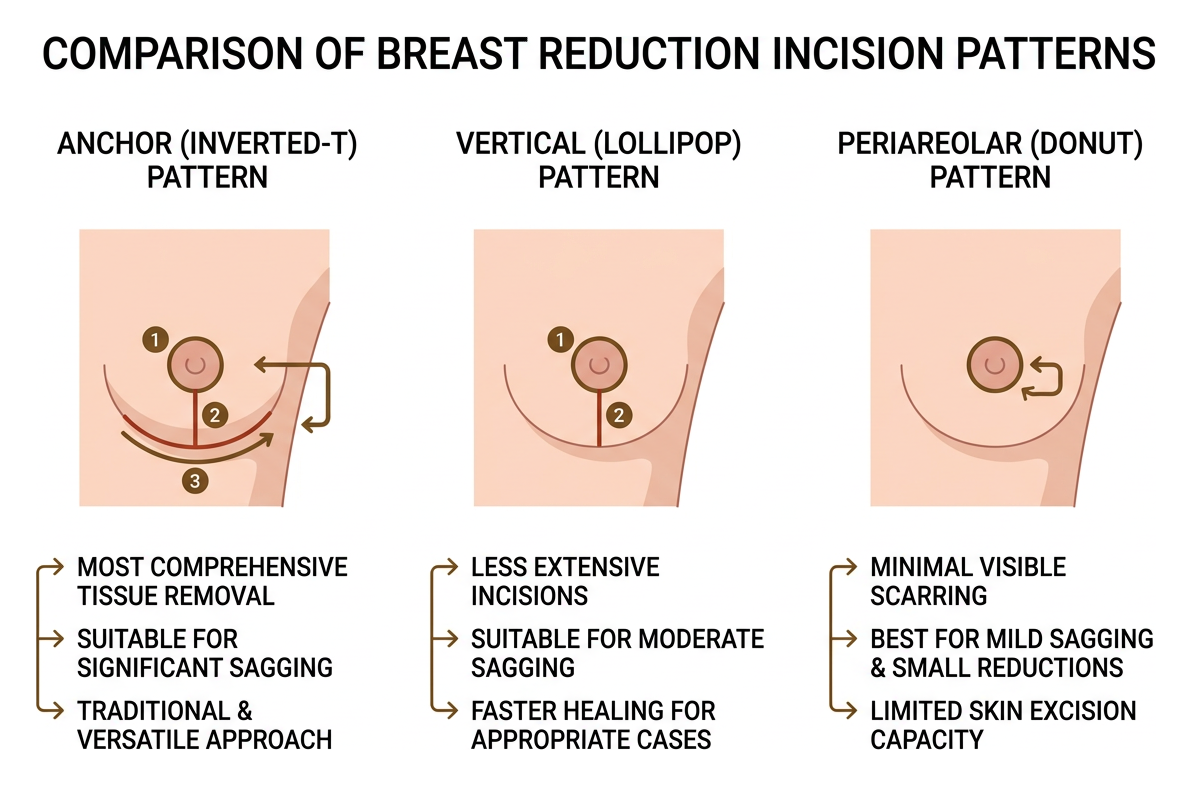
The Anchor (Inverted-T) Technique
The anchor incision (or Wise-pattern) is the most traditional and versatile technique. It involves three incision lines:
- A circular incision around the edge of the areola.
- A vertical incision running from the bottom of the areola down to the breast crease.
- A horizontal incision along the natural fold of the breast crease.
This technique is highly reliable and is typically recommended for patients who require a significant reduction in size or have a substantial amount of sagging tissue. It allows the surgeon maximum control over the final shape, projection, and symmetry of the breast.
The Vertical (Lollipop) Technique
For moderate reductions, the vertical or “lollipop” technique is often a preferred choice. It utilizes only two incisions: one around the areola and one running vertically down to the breast crease. Because there is no horizontal incision along the breast fold, the overall scarring is reduced. This method is excellent for reshaping and lifting while removing a moderate amount of excess tissue.
Liposuction-Assisted Breast Reduction
In select cases where the breasts consist primarily of fatty tissue rather than dense glandular tissue, liposuction may be used as the primary reduction method. This approach involves tiny puncture incisions through which a cannula is inserted to vacuum out excess fat.
While liposuction-only reductions offer minimal scarring and exceptionally rapid recovery times, they do not lift sagging skin or reposition the nipple. Often, liposuction is used as an adjunct tool during a traditional surgical reduction to contour the sides of the breast and the armpit area for a smoother, more seamless transition.
Understanding Breast Reduction Cost and Insurance Coverage
When considering any surgical procedure, financial planning is an essential piece of the puzzle. The cost of a breast reduction can vary widely depending on the complexity of the surgery, the facility used, and whether your health insurance covers the procedure.
Does Health Insurance Cover Breast Reduction?
Because overly large breasts can contribute to documented physical problems such as chronic back, neck and shoulder pain or persistent skin irritation, breast reduction may be covered by health insurance when it is considered medically necessary. Coverage requirements vary by insurance provider and plan, and patients may need documentation of symptoms, prior conservative treatments, photographs or other information before authorization is granted.
To qualify for coverage, insurance providers typically require:
- A history of chronic physical symptoms (such as back, neck, and shoulder pain) that have not improved with conservative treatments like physical therapy, chiropractic care, or specialized support bras.
- Detailed clinical documentation from your primary care physician or specialists.
- A minimum volume of tissue to be removed from each breast (often calculated using the Schnur Scale, which correlates your body surface area to the required weight of tissue to be removed).
If you are looking for care in the tri-state area, it can be helpful to research local options and compare how insurance documentation is handled.
Financing Options and Out-of-Pocket Costs in New Jersey
If your insurance provider deems the procedure cosmetic rather than medically necessary, or if you do not meet their strict tissue-removal criteria, you may choose to pay out-of-pocket. Self-pay costs typically include the surgeon’s fee, anesthesia fees, operating room fees, and post-operative garments.
To help our patients navigate these details, we provide a transparent breakdown of financial expectations in our guide to Breast Reduction Cost NJ. We also offer flexible financing options through reputable healthcare lending services like CareCredit to make your body transformation goals highly accessible.
What to Expect During Your Consultation
Your journey begins with a private, in-depth consultation. This is a collaborative meeting designed to evaluate your health, discuss your aesthetic preferences, and establish a customized surgical plan.
Preparing for Your Appointment in Montclair
When you visit our state-of-the-art facility in Montclair, New Jersey, you will meet with an experienced plastic surgeon. To make the most of your consultation, we recommend bringing:
- A detailed list of any physical symptoms you experience.
- Records of past treatments you’ve tried for pain relief (such as physical therapy or chiropractic records).
- Any questions you have about the recovery process, surgical techniques, or expected scarring.
- A clear idea of your size goals, though it is best to focus on how you want your breasts to look and feel in proportion to your body rather than a specific bra cup size, as cup sizes can vary dramatically between brands.
During this visit, your surgeon will perform a physical evaluation, take measurements, and discuss your medical history, including any plans for future pregnancies or weight loss, as these factors can influence your long-term results.
Tailoring the Procedure to Your Aesthetic Goals
Every body is unique, and we believe your surgical plan should be too. When you consult with us in Montclair, your surgeon will carefully tailor the incision pattern and tissue removal to complement your frame.
We encourage you to look at a wide variety of photos to understand what is realistically achievable. Reviewing Before and After Breast Reduction galleries of patients with similar body types is an excellent way to align your expectations with your surgeon’s artistic vision.
Your Recovery Journey: What to Expect Week by Week
Knowing what lies ahead during your recovery can alleviate anxiety and help you plan your time off from work and daily responsibilities. While everyone heals at their own pace, there is a general timeline most patients follow.
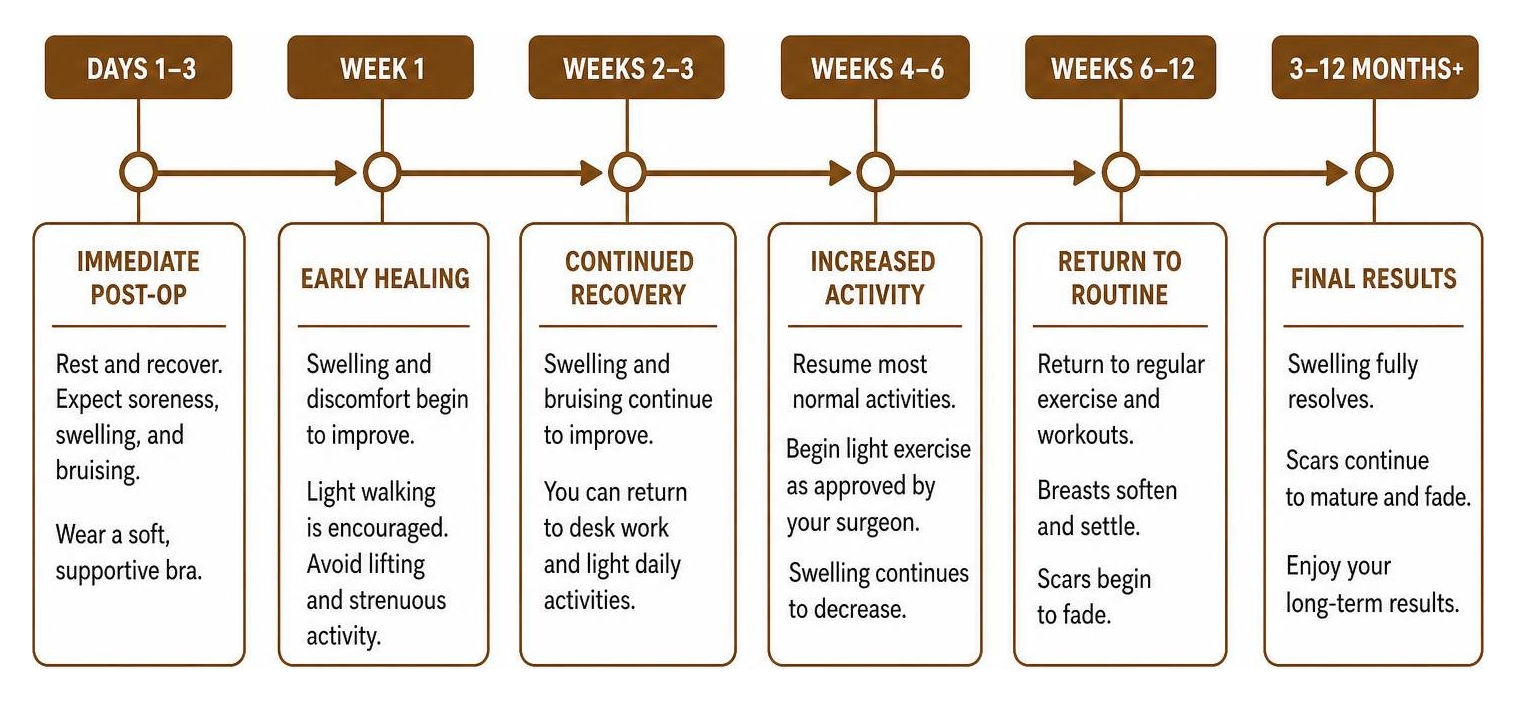
The Immediate Post-Op Phase
Breast reduction is typically performed as an outpatient procedure under general anesthesia, meaning you will be able to go home the same day to recover in the comfort of your own bed.
- Days 1 to 3: You will wear a soft, supportive surgical bra. You can expect moderate soreness, swelling, and bruising, which are easily managed with prescribed discomfort medication. You will need a trusted friend or family member to drive you home and assist you around the house for the first 24 to 48 hours.
- Week 1: Most patients can transition from prescription pain medication to over-the-counter options. Swelling will begin to peak and then gradually subside. You will return to our office for your first post-operative checkup.
Returning to Work and Exercise
- Weeks 2 to 3: Many patients feel well enough to return to desk jobs and light daily activities within 10 to 14 days. However, you must continue to avoid heavy lifting, bending, straining, or raising your arms above your head.
- Weeks 4 to 6: The majority of your swelling will have resolved, and your incisions will be well on their way to healing. With your surgeon’s clearance, you can gradually reintroduce light exercise, such as walking or stationary cycling, though high-impact activities like running or jumping should still be avoided.
- Month 3 and Beyond: Your breasts will begin to settle into their final, natural shape. The tissue will soften, and you can begin shopping for standard, non-wired bras.
For a comprehensive, day-by-day look at the healing process, bookmark our guide on breast reduction recovery week by week.
Potential Risks, Complications, and Long-Term Considerations
As with any major surgical procedure, it is vital to weigh the immense benefits of reduction mammoplasty against the potential risks and long-term considerations.
Managing Scarring Over Time
While some scarring is inevitable with surgical breast reduction, modern techniques are designed to place incisions in highly discreet areas that are easily hidden by bras, swimsuits, and low-cut tops.
Your scars will initially appear red, raised, or slightly firm. Over the course of a year, they will naturally soften, flatten, and fade to a lighter tone. We provide all of our patients with detailed scar-management protocols, which may include medical-grade silicone gel, gentle massage, and strict sun protection to ensure your incisions heal as beautifully as possible.
Breastfeeding and Sensation Changes
Two common questions patients ask during consultations are: “Will I lose nipple sensation?” and “Will I be able to breastfeed in the future?”
- Nipple Sensation: Temporary numbness or changes in nipple or breast sensation can occur following breast reduction surgery. Sensation may improve as healing progresses, although permanent changes in sensation are a potential surgical risk.
- Breastfeeding: Breast reduction surgery may affect a patient’s ability to breastfeed because the procedure can alter breast tissue and milk ducts. The degree of impact can vary depending on the surgical technique and individual anatomy. The American Society of Plastic Surgeons outlines breastfeeding, changes in sensation and other potential risks of breast reduction surgery. Patients who hope to breastfeed in the future should discuss this with their plastic surgeon before surgery.
Long-Term Results and Final Breast Shape
The physical and aesthetic results of a breast reduction are visible almost immediately. Once the heavy, dragging weight is removed, you will feel lighter and stand taller.
However, it is important to remember that your breasts will continue to evolve. Gravity, aging, and natural fluctuations in your weight can alter the size and shape of your breasts over time. To maintain your beautiful, proportionate results, we recommend maintaining a stable, healthy weight and wearing supportive, wire-free bras during physical activities.
If you are curious about surgical approaches or want to see how patients have experienced their transformations, we encourage you to discuss these options during your consultation to find the best path forward for your body.
Finding the Best Breast Reduction Surgeons Near Me
Your safety, comfort, and final results depend entirely on the skill and experience of your plastic surgeon. When searching for breast reduction near me, it is crucial to look beyond search engine rankings and evaluate credentials carefully.

What Credentials to Look For
To ensure you are in the safest possible hands, verify that your chosen surgeon meets the following criteria:
- Board Certification: Ensure they are certified by the American Board of Plastic Surgery. This is the only plastic surgery board recognized by the American Board of Medical Specialties.
- Specialized Fellowship Training: Look for surgeons who have completed dedicated fellowships in aesthetic or reconstructive breast surgery.
- A Clean Safety Record: The surgeon should operate in an accredited, state-of-the-art surgical facility with a fully certified medical support team.
- A Caring, Personalized Approach: You should feel heard, respected, and never rushed during your consultation.
At The Plastic Surgery Group of New Jersey, our board-certified plastic surgeons, Dr. Allen D. Rosen, M.D. and Dr. Valerie J. Ablaza, M.D., bring decades of combined experience, artistic precision, and compassionate care to every procedure. Together with our highly trained team, including fellowship-trained Breast Reduction Surgeon Dr. Cece, we are dedicated to helping you achieve a lighter, more comfortable, and beautifully proportioned body.
Your Next Steps Toward Relief
You do not have to live with the physical and emotional burden of overly large breasts. Relief, comfort, and renewed confidence are closer than you think.
If you are ready to take the next step on your journey to a lighter, more active life, we invite you to schedule a private consultation at our state-of-the-art facility in Montclair, New Jersey. Let us help you design a customized treatment plan that perfectly aligns with your lifestyle and aesthetic goals. Contact us today to begin your transformation.


