
Male Breast Reduction: A Clear Path to a Flatter Chest
Male breast reduction treats an enlarged male chest by removing excess fat, firm breast tissue, or both. It may be an option when enlarged breasts persist despite weight loss, exercise, or treatment of an underlying cause. The first step is a medical evaluation to determine whether the fullness is related to gynecomastia, excess fatty tissue, medication, hormones, or another health concern.
For many men, chest contouring is about more than appearance. Gynecomastia can make fitted clothing, swimming, and social situations feel uncomfortable. Surgery can create a flatter, more masculine chest when a patient is in good general health, near a stable weight, and has realistic expectations about scars, recovery, and results.
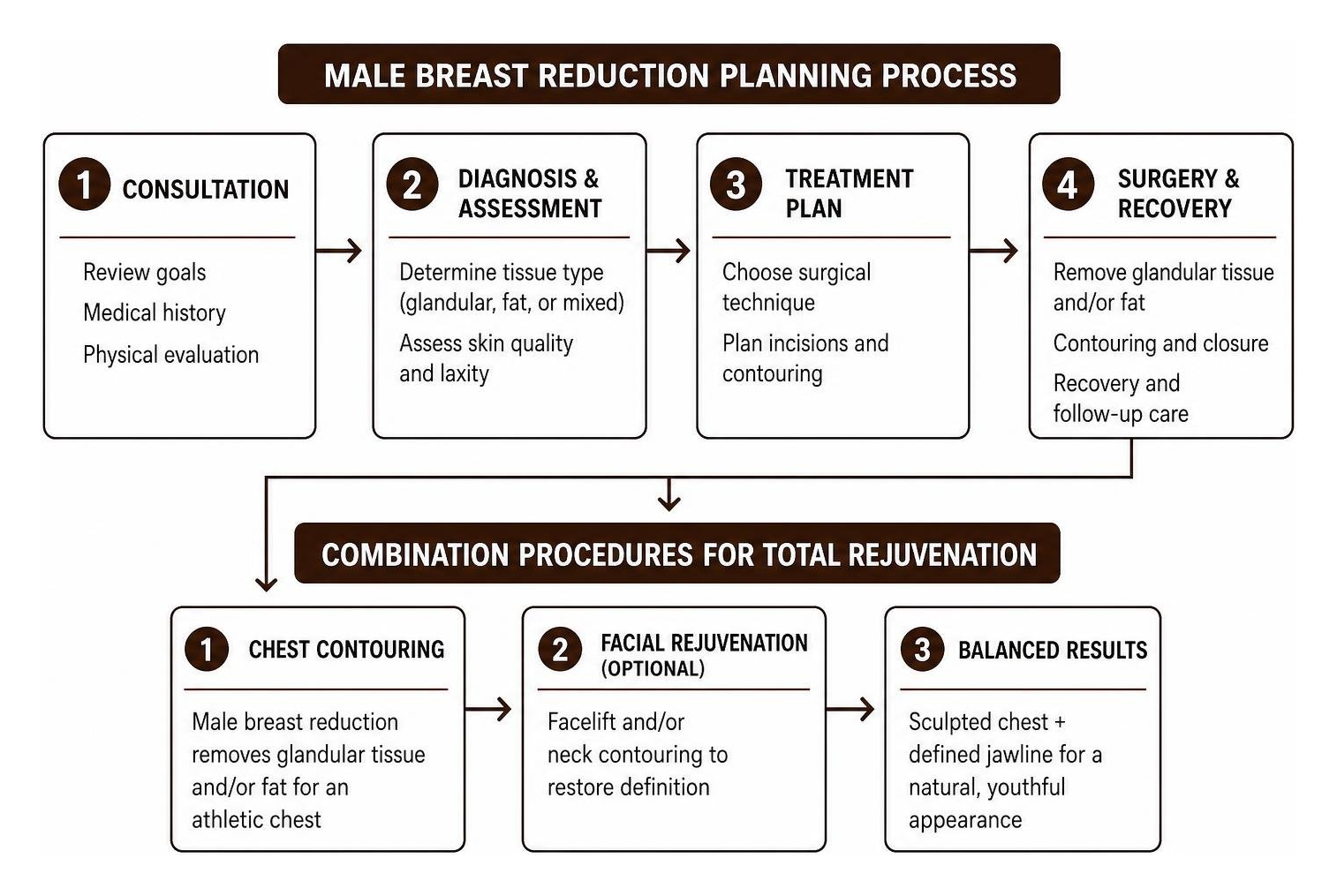
Male breast reduction is often performed using liposuction, surgical removal of glandular tissue, or a combination of both. Some patients also explore facial rejuvenation, such as a facelift or neck contouring, when they want their appearance to better reflect how they feel.
I am Dr. Allen Rosen, a plastic surgeon and founding partner of The Plastic Surgery Group of New Jersey in Montclair. With more than two decades of experience in plastic surgery, I help patients considering male breast reduction understand their options and plan for natural-looking results. Our experienced plastic surgeons guide you through plastic surgery consultations and review New Jersey plastic surgery photos so you can make an informed decision.

Understanding Gynecomastia and Male Cosmetic Surgery Options
Gynecomastia is a medical condition characterized by the benign enlargement of male breast tissue. It can affect one or both sides of the chest and stems from an imbalance between the hormones estrogen and testosterone. While estrogen stimulates breast tissue growth, testosterone works to inhibit it. When this balance shifts—due to natural puberty, aging, certain prescription medications, anabolic steroids, or underlying metabolic health conditions—glandular tissue develops beneath the areola.
It is important to distinguish true gynecomastia from pseudogynecomastia. True gynecomastia involves dense, fibrous glandular tissue that feels firm to the touch. In contrast, pseudogynecomastia consists purely of localized adipose deposits (fat) without significant glandular proliferation. Many patients exhibit a mixed presentation consisting of both dense gland and soft fat.
In recent years, the stigma surrounding aesthetic care has lifted, leading to a notable increase in cosmetic procedures for men. Today’s patients actively seek treatments that align their physical appearance with their healthy lifestyles. Exploring modern male plastic surgery trends reveals that men are focusing heavily on athletic chest contouring and sharp facial profiles to project vigor and confidence.
Candidates for Male Breast Reduction and Chest Contouring
Identifying whether you are a suitable candidate involves assessing medical history, physical anatomy, and lifestyle habits. Surgery is ideal for men who:
- Have persistent chest enlargement that has not resolved over time.
- Maintain a stable body mass index (BMI) within a healthy range.
- Are in good overall health without unmanaged systemic illnesses.
- Have realistic expectations regarding post-operative scars and healing timelines.
A common misconception is that dedicated gym routines can eliminate all chest fullness. While strength training builds the underlying pectoralis major muscles, learning about exercise limitations for gynecomastia makes it clear that exercise cannot burn away dense glandular tissue. When fullness is driven purely by stubborn fat pockets, targeted chest fat removal through advanced liposuction can effectively sculpt the area. Skin elasticity also plays a vital role; men with good skin tone experience natural retraction over their new muscular contours, whereas significant skin laxity may require surgical trimming.
Combining Chest Sculpting with Facial Rejuvenation
Many men who visit our Montclair practice choose to address multiple aesthetic goals in a coordinated treatment plan. As we age, gravity, sun exposure, and volume loss can lead to sagging along the lower face and neck, softening an otherwise strong jawline. Combining chest reduction with facial procedures such as a facelift or neck contouring creates total aesthetic balance.
By pairing a sculpted, athletic chest with a defined jawline, patients achieve comprehensive rejuvenation that looks completely natural. Addressing both areas restores an energized, youthful appearance without looking overdone.
The Male Breast Reduction Procedure and Surgical Techniques
Every surgical plan is customized to the patient’s specific tissue composition. During the pre-operative evaluation, we carefully assess the ratio of glandular tissue to subcutaneous fat, as well as the position and diameter of the nipple-areolar complex.

Surgeries are typically performed under general anesthesia or twilight sedation to ensure complete comfort. Depending on the patient’s anatomy, we utilize specialized gynecomastia surgical options to reshape the chest wall. When enlarged or puffy areolas are present, male nipple reduction techniques can be integrated through discreet periareolar incisions to reduce diameter and project a flatter appearance.
What Happens During Male Breast Reduction Surgery
The operation generally takes about 1.5 hours to complete. The surgical technique typically involves two main components:
- Liposuction: Small, hidden incisions are placed at the edge of the areola or along the natural chest crease. A specialized cannula is introduced to break up and aspirate fatty tissue, feathering the edges into the latissimus and abdominal muscles for a smooth transition.
- Glandular Excision: Because dense glandular tissue is too fibrous for liposuction alone, an incision is made along the lower border of the areola (an intra-areolar or Webster incision). The firm gland is sharply excised under direct visualization.
In the UK, the NHS guide on male breast reduction notes that public procedures may involve an overnight stay. In our private Montclair surgical facility, the procedure is performed on an outpatient basis, allowing patients to recover in the comfort of their own homes the same day.
Evaluating Surgical Solutions Versus Non-Invasive Approaches
While temporary fixes like compression shirts conceal excess volume, lasting correction requires an anatomical solution. Exploring surgical solutions for gynecomastia highlights why non-invasive treatments often fall short when dense glandular tissue is present.
Understanding the various gynecomastia types and treatments helps clarify which technique will provide the smoothest chest contour and ensure appropriate skin redraping over time.
Recovery, Expected Results, and Potential Risks
The healing phase requires patience and adherence to post-operative instructions. Immediately following surgery, patients are fitted with a specialized compression garment.

Recovery milestones generally follow this schedule:
- Days 1–3: Mild to moderate soreness managed with prescribed medication. Light walking is encouraged to promote circulation.
- Weeks 1–2: The compression vest is worn continuously to minimize swelling and support tissue adherence. Most non-strenuous desk jobs can be resumed.
- Weeks 3–4: Light cardiovascular exercise can usually be reintroduced, avoiding heavy upper-body strain.
- Weeks 6+: Strenuous workouts and heavy weightlifting can typically resume.
Reviewing gynecomastia before and after results demonstrates that while initial improvements are noticeable right away, post-surgical swelling gradually resolves over several months. Final results typically settle between 3 and 6 months post-op as tissues soften and scars mature.
Managing Aftercare and Complications
While male breast reduction has a high safety record, every surgical intervention carries potential risks. Being informed helps patients recognize normal healing versus issues that require clinical attention.
- Hematoma and Seroma: Localized collections of blood or fluid beneath the skin can occur. Wearing the compression vest diligently significantly lowers this risk.
- Infection: Rare, but prevented through sterile surgical technique and prophylactic antibiotics when indicated.
- Altered Sensation: Temporary numbness or heightened sensitivity around the nipple-areolar complex is common and typically resolves over several months.
- Scar Maturation: Incisions fade significantly over 12 to 18 months. Silicone scar gels and sun protection help ensure scars heal discreetly.
- Contour Asymmetry: Minor variations in healing can occur; careful surgical planning ensures the most symmetrical outcome possible.
Navigating Costs, NHS Eligibility, and Surgeon Selection
Patients researching this procedure often compare private practice pricing with public healthcare models. In the UK, male breast reduction is rarely funded by the National Health Service (NHS). Funding is typically restricted to exceptional circumstances involving severe, long-standing pain, extreme asymmetry, or failed medical interventions after reaching a stable BMI. In the UK private sector, surgery costs approximately £3,500 to £5,500, plus consultation and aftercare fees.
In the United States, costs depend on the surgical technique (liposuction alone versus gland excision), facility fees, and anesthesia. For a detailed breakdown of procedure planning and financial considerations, our comprehensive gynecomastia guide provides helpful insights.
| Factor | NHS Coverage (UK) | Private Surgery (US & UK) |
|---|---|---|
| Availability | Extremely limited; strict medical necessity criteria | Widely available for cosmetic and functional correction |
| Average Cost | Covered if approved (rare) | UK: £3,500–£5,500+ / US: Variable by procedure scope |
| Wait Times | Long waiting lists and multi-step approvals | Scheduled at patient and surgeon convenience |
| Technique Customization | Focused primarily on functional reduction | Highly tailored aesthetic sculpting and scar minimization |
Choosing a Qualified Plastic Surgeon
Selecting the right surgeon is the single most important decision in your aesthetic journey. Patients should always verify credentials:
- Board Certification: Ensure your surgeon is certified by recognized boards, such as the American Board of Plastic Surgery (ABPS) in the US or registered on the GMC specialist register in the UK.
- Experience & Specialization: Choose a surgeon with experience in male chest anatomy and body contouring.
- Accredited Facilities: Operations should be performed in fully accredited surgical centers that meet strict safety standards.
During your consultation, ask to see a comprehensive portfolio of before-and-after photos, discuss complication rates openly, and ensure you feel comfortable with the surgical team.
Frequently Asked Questions About Male Aesthetic Procedures
Is male breast reduction permanent?
Yes. The glandular tissue and fat cells removed during surgery cannot regenerate. However, significant weight gain, the use of certain medications, or anabolic steroid use can cause remaining fat or breast tissue to expand. Maintaining a stable weight and healthy lifestyle preserves your results permanently.
How much does male chest reduction cost?
In private practice, the overall cost varies depending on whether you require liposuction, surgical excision, or both, alongside anesthesia and facility fees. In the UK, private rates range between £3,500 and £5,500 plus consultations, while US pricing reflects the individualized complexity of the procedure.
What is the typical recovery timeline after surgery?
Most patients take about 3 to 7 days off from sedentary work. You will wear a supportive compression vest for 1 to 2 weeks (often longer for strenuous tasks), avoid heavy lifting for roughly 3 weeks, and see your full, final contours emerge within 3 to 6 months.
Transform Your Profile in Montclair
Restoring a firm, masculine chest profile can have a profound impact on your self-esteem, comfort, and physical freedom. At The Plastic Surgery Group of New Jersey, our board-certified plastic surgeons—Dr. Allen D. Rosen, M.D., and Dr. Valerie J. Ablaza, M.D.—provide personalized surgical care in our state-of-the-art facility in Montclair, New Jersey, along with fellowship-trained and board-eligible plastic surgeon Dr. John A. Cece.
Whether you are looking to address gynecomastia, explore facial rejuvenation, or achieve comprehensive body refinement, we invite you to learn more about plastic surgery in Montclair, NJ and schedule your private consultation with our team today.


