
More Than a Nose Job: The Breathing Benefits Most People Don’t Know About
Rhinoplasty for breathing issues is one of the most effective — and most misunderstood — surgical solutions available today. Most people assume a nose job is purely cosmetic. But for many patients in New Jersey and beyond, rhinoplasty is first and foremost a medical procedure that can dramatically change how they breathe, sleep, and live.
Here’s what rhinoplasty can do for breathing problems:
| Problem | How Rhinoplasty Helps |
|---|---|
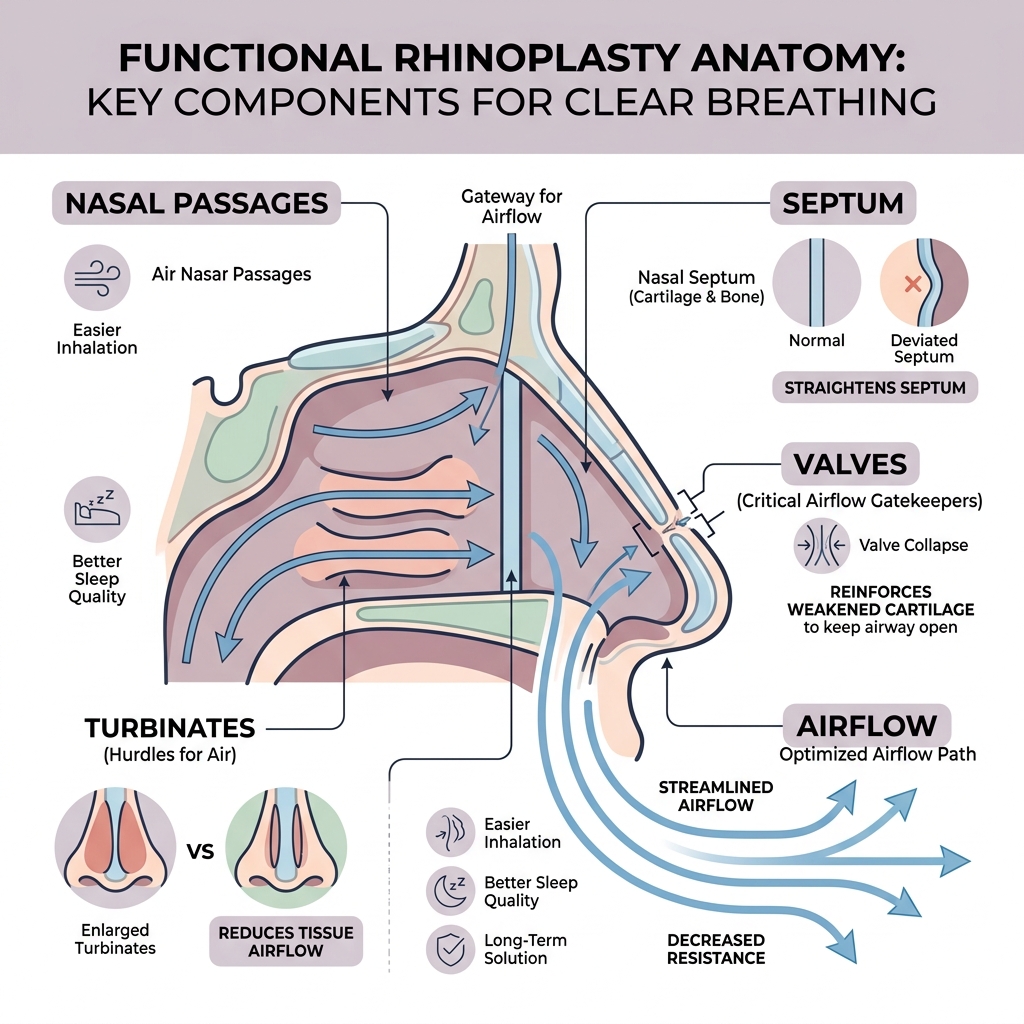
| Deviated septum | Straightens the septum to open both nasal passages |
| Nasal valve collapse | Reinforces weakened cartilage to prevent airway collapse |
| Enlarged turbinates | Reduces tissue bulk to improve airflow |
| Nasal polyps | Removes obstructions blocking sinus drainage |
| Post-injury obstruction | Corrects structural damage from trauma or prior surgery |
Many people quietly adapt to mouth breathing, restless sleep, or constant congestion — not realizing these symptoms aren’t normal. They reach for nasal sprays. They push through morning fatigue. They write it off as allergies.
But when the structure of the nose is the problem, no medication can fix it. Only surgery addresses the root cause.
Whether you’re dealing with a deviated septum, nasal valve collapse, or years of unresolved congestion, functional rhinoplasty offers a long-term solution — not just temporary relief.
I’m Dr. Allen Rosen, a board-certified plastic surgeon and founding partner of The Plastic Surgery Group of New Jersey, with over two decades of experience helping patients achieve both functional and aesthetic results through rhinoplasty for breathing issues. I’ll walk you through everything you need to know to decide if this procedure is right for you.
Understanding Rhinoplasty for Breathing Issues
When most people hear the word “rhinoplasty,” they think of red-carpet transformations. However, in the medical world, we categorize this surgery into two distinct but often overlapping types: cosmetic and functional.
Functional rhinoplasty is a specialized procedure focused on restoring the nose’s primary job—acting as the gateway for air to enter your body. While a cosmetic “nose job” focuses on the bridge, tip, or width of the nose for beauty, a functional Rhinoplasty focuses on internal mechanics.
The goal is to optimize “nasal patency,” which is just a fancy medical term for how open and unobstructed your nasal passages are. If your internal “pipes” are crooked, narrow, or prone to collapsing when you inhale, your airflow dynamics are compromised. This leads to a feeling of constant stuffiness that no amount of decongestant can clear.
Who is a Candidate for Rhinoplasty for Breathing Issues?
How do you know if your breathing trouble is a structural issue rather than just a stubborn cold? Many of our patients in Montclair and throughout Essex County, NJ come to us after years of frustration. You might be a prime candidate for rhinoplasty for breathing issues if you experience:
- Chronic Nasal Congestion: You feel “stuffed up” on one or both sides most of the time, regardless of the season.
- Mouth Breathing: You find yourself breathing through your mouth because your nose simply doesn’t provide enough air, leading to a chronically dry throat.
- Nasal Trauma: You’ve suffered a broken nose from sports, an accident, or a fall that never quite felt the same afterward.
- Sleep Disturbances: Your partner complains of your loud snoring, or you wake up feeling exhausted because you aren’t getting enough oxygen at night.
- Exercise Intolerance: You hit a “wall” during cardio because you can’t get enough air through your nose, forcing you to gasp for breath.
Combining Aesthetics with Rhinoplasty for Breathing Issues
One of the most common questions we hear is: “If you’re fixing my breathing, can you also fix that bump on my bridge?” The answer is a resounding yes. This combined approach is often called a septorhinoplasty.
At The Plastic Surgery Group of New Jersey, we believe that form follows function. If we are already going inside to straighten a septum or reinforce a valve, it is often the perfect time to refine the external appearance. Many patients find it efficient to undergo one surgery and one recovery period to achieve a nose that both works better and looks better.
By checking our Before and After Nose gallery, you can see how structural integrity and facial harmony go hand-in-hand. If you’ve ever thought, “What to Do If I Hate My Nose,” addressing a breathing issue might be the catalyst to finally achieving the look you’ve always wanted while improving your health.
Common Structural Causes of Nasal Obstruction
To fix a problem, we first have to understand the anatomy. Your nose isn’t just a hollow triangle; it’s a complex system of bone, cartilage, and soft tissue.
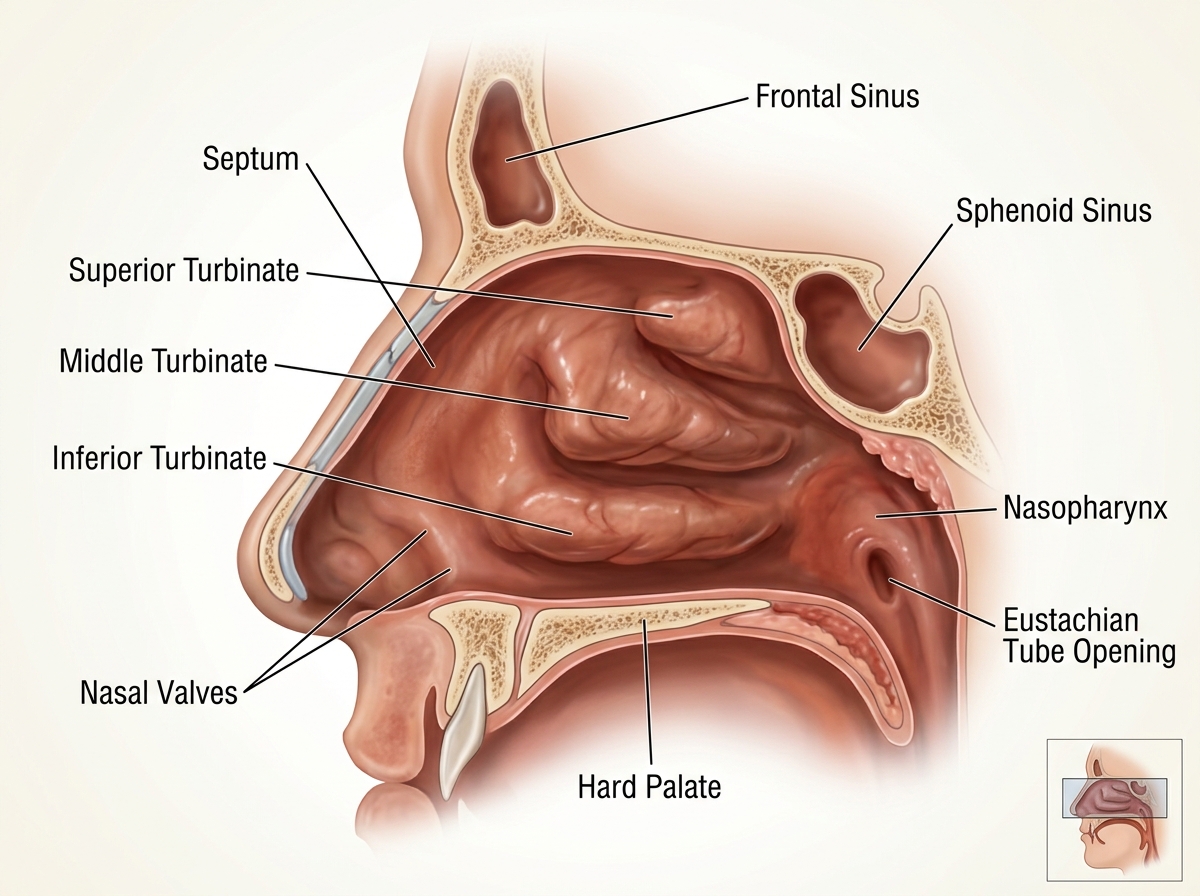
The three most common culprits behind a “blocked” nose are:
- Deviated Septum: The septum is the wall of cartilage and bone that divides your nostrils. If it’s crooked (deviated), it can narrow one passage significantly.
- Nasal Valve Collapse: The nasal valves are the narrowest parts of your airway. If the cartilage supporting these valves is weak, they “suck inward” when you breathe in, cutting off your air.
- Turbinate Hypertrophy: Turbinates are long, thin structures inside the nose that humidify air. If they become chronically swollen (hypertrophied), they act like a roadblock for airflow.
Comparing Nasal Obstructions
| Feature | Deviated Septum | Nasal Valve Collapse |
|---|---|---|
| Location | The center wall of the nose | The sidewalls/nostril area |
| Primary Symptom | Constant blockage on one side | Blockage that worsens when inhaling deeply |
| Cause | Congenital or trauma (broken nose) | Weak cartilage or aging |
| Visual Sign | Often invisible externally | Nostrils may “pinch” inward during a breath |
The Role of the Nasal Valve
The nasal valve is arguably the most important part of your respiratory entrance. It is the narrowest point of the airway, meaning even a tiny bit of narrowing here has a massive impact on your ability to breathe.
There are two parts: the internal valve and the external valve. If the cartilage in these areas is too thin or has been weakened by previous surgery or injury, it loses its “spring.” Imagine trying to breathe through a straw that collapses every time you take a sip—that is what nasal valve collapse feels like. Rhinoplasty for breathing issues focuses on reinforcing these sidewalls so they stay open, even when you’re breathing hard during a workout.
Chronic Inflammation and Nasal Polyps
While many issues are structural (bone and cartilage), some are mucosal. Nasal polyps are soft, noncancerous growths that hang like grapes inside your nasal passages. They are often the result of chronic inflammation from allergies or infections.
While we always explore non-surgical alternatives like steroid sprays or allergy treatments first, these polyps can sometimes become large enough to physically block sinus drainage. In these cases, we can remove them during a functional procedure to clear the path for air and drainage.
How Functional Rhinoplasty Restores Airflow
So, how do we actually “fix” the plumbing? We use a variety of surgical techniques tailored to your specific anatomy.
- Septoplasty: We straighten the midline cartilage to ensure both “tunnels” are equal in size.
- Spreader Grafts: These are tiny strips of cartilage used like “struts” to widen the internal nasal valve.
- Turbinectomy/Turbinate Reduction: We gently reduce the size of the swollen turbinates to create more room.
- Alar Batten Grafts: These reinforce the outer edges of the nostrils to prevent them from collapsing inward.
Correcting a Deviated Septum
A deviated septum is the number one reason people seek functional nasal surgery. Almost 80% of people have a septum that is at least slightly off-center, but when it’s severe, it’s a game-changer. By realigning the septum to the midline, we restore bilateral airflow. One of the most immediate benefits patients report is a significant reduction in snoring, as air can finally move smoothly without creating the vibrations that cause noise.
Supporting the Nasal Sidewalls
If your nose feels like it’s “caving in” when you take a deep breath, you likely need sidewall support. We use alar batten grafts or lateral wall tension techniques to provide inhalation stability. We often take a small piece of cartilage from your own septum (or sometimes the ear) to act as a permanent support beam. This ensures that no matter how hard you breathe, your airway remains wide open.
The Path to Better Breathing: Recovery and Results
One of the biggest concerns patients have is the recovery. “Will I be out of commission for a month?” “Will it hurt?”
Actually, modern techniques have made the recovery for rhinoplasty for breathing issues much more manageable than in years past. Most of our New Jersey patients find they can return to work or school within 7 to 10 days.
What to Expect During Recovery
The first week is mostly about managing congestion. Because we are working on the internal structures, you will have some internal swelling that makes you feel “stuffed up” for a few days—ironic, we know! But once that swelling subsides, the “lightbulb moment” happens.
Our Post-Operative Tips for Success:
- Keep it Elevated: Sleep with two or three pillows to keep your head above your heart. This significantly reduces swelling and bruising.
- Saline is Your Best Friend: Use saline nasal rinses frequently to keep the internal passages moist and clear of crusting.
- No Heavy Lifting: Avoid strenuous exercise for at least two weeks. Increasing your heart rate too soon can lead to nosebleeds or increased swelling.
- Hands Off: Your cast or splint will stay on for about a week. Resist the urge to “peek” or wiggle it!
Long-Term Benefits of Improved Airflow
The real magic happens about three to six months after surgery, once the deep tissue swelling has fully resolved. The benefits extend far beyond just “breathing better.”
- Restorative Sleep: When you can breathe through your nose at night, you stay in deep sleep cycles longer. You’ll wake up feeling refreshed rather than groggy.
- Athletic Performance: Whether you’re running through South Mountain Reservation or hitting the gym in Manhattan, better oxygen intake means better endurance.
- Reduced Sinus Infections: Better airflow means better drainage. Many of our patients find they suffer from far fewer sinus headaches and infections post-surgery.
- Olfactory Improvement: Believe it or not, many patients report that their sense of smell (and taste!) improves once the physical blockages are removed.
Frequently Asked Questions about Rhinoplasty for Breathing Issues
Will functional rhinoplasty change the shape of my nose?
It depends on your goals. If we are only performing a septoplasty, the external shape usually stays the same. However, if we are using grafts to support the nasal valves or straightening a severely crooked nose, subtle changes may occur. Most patients choose to use this opportunity to make desired cosmetic refinements simultaneously.
Is surgery for breathing issues covered by insurance?
In many cases, yes. While insurance does not cover cosmetic changes (like removing a hump), it often covers the functional components of the surgery, such as septoplasty or turbinate reduction, if they are deemed medically necessary. Our office in Montclair can help you navigate these details during your consultation.
How long does it take to breathe clearly after the procedure?
You will feel congested for the first 1–2 weeks due to internal swelling and splints. Most patients begin to feel a significant improvement in airflow by the end of the second week, with full results becoming apparent as the internal tissues settle over the following months.
Breathe Better, Live Better: Final Thoughts
At The Plastic Surgery Group of New Jersey, we know that a nose isn’t just a feature on your face- it’s a vital part of your health and well-being. Living with chronic breathing issues is exhausting, but it doesn’t have to be your “normal.”
When you are visiting us at our state-of-the-art facility in Montclair, you are in the hands of board-certified experts. Dr. Allen Rosen and Dr. Valerie Ablaza combine decades of surgical precision with a warm, patient-centered approach to ensure you get the results you deserve.
If you’re ready to stop struggling for every breath and start living with clarity, we invite you to Schedule a consultation for Rhinoplasty with us today. Let’s help you breathe easy again.
External Medical Resources for Further Reading:
- Learn about the science of functional nasal surgery
- Understanding nasal obstruction and airflow
- Information on deviated septum
- Overview of chronic sinusitis and nasal polyps
- What to expect from a board-certified plastic surgeon


