
Find a Qualified Breast Augmentation Surgeon Near You
To find the right provider for breast augmentation near me, start by confirming the surgeon is certified by the American Board of Plastic Surgery, ask to see breast augmentation before-and-after photos, and make sure surgery will take place in an accredited facility. A good consultation should cover your goals, implant options, recovery, total cost, and the risks that apply to you.
Breast augmentation uses implants, or sometimes fat transfer, to add breast volume or improve shape and symmetry. It remains one of the most common cosmetic surgeries in the United States, but the best result is not about choosing the largest implant. It is about choosing an experienced surgeon and a plan that fits your frame, breast tissue, lifestyle, and definition of a natural-looking result.
As Dr. John A. Cece, a fellowship-trained, board-eligible plastic and reconstructive surgeon with advanced aesthetic and microsurgical breast fellowship training, I help New Jersey patients make informed choices when searching for breast augmentation near me. The next sections explain how to compare local surgeons, understand your options, and prepare for surgery with confidence.

Breast augmentation near me additional sources to review.
Understanding Breast Augmentation: Implants, Techniques, and Options

Breast enhancement is not a one-size-fits-all procedure. Today’s surgical techniques allow for an incredible degree of customization, letting you tailor everything from the internal fill material of the implant to the exact surgical placement and incision pathway. Understanding these nuances helps you have an empowered, detailed discussion during your initial visit.
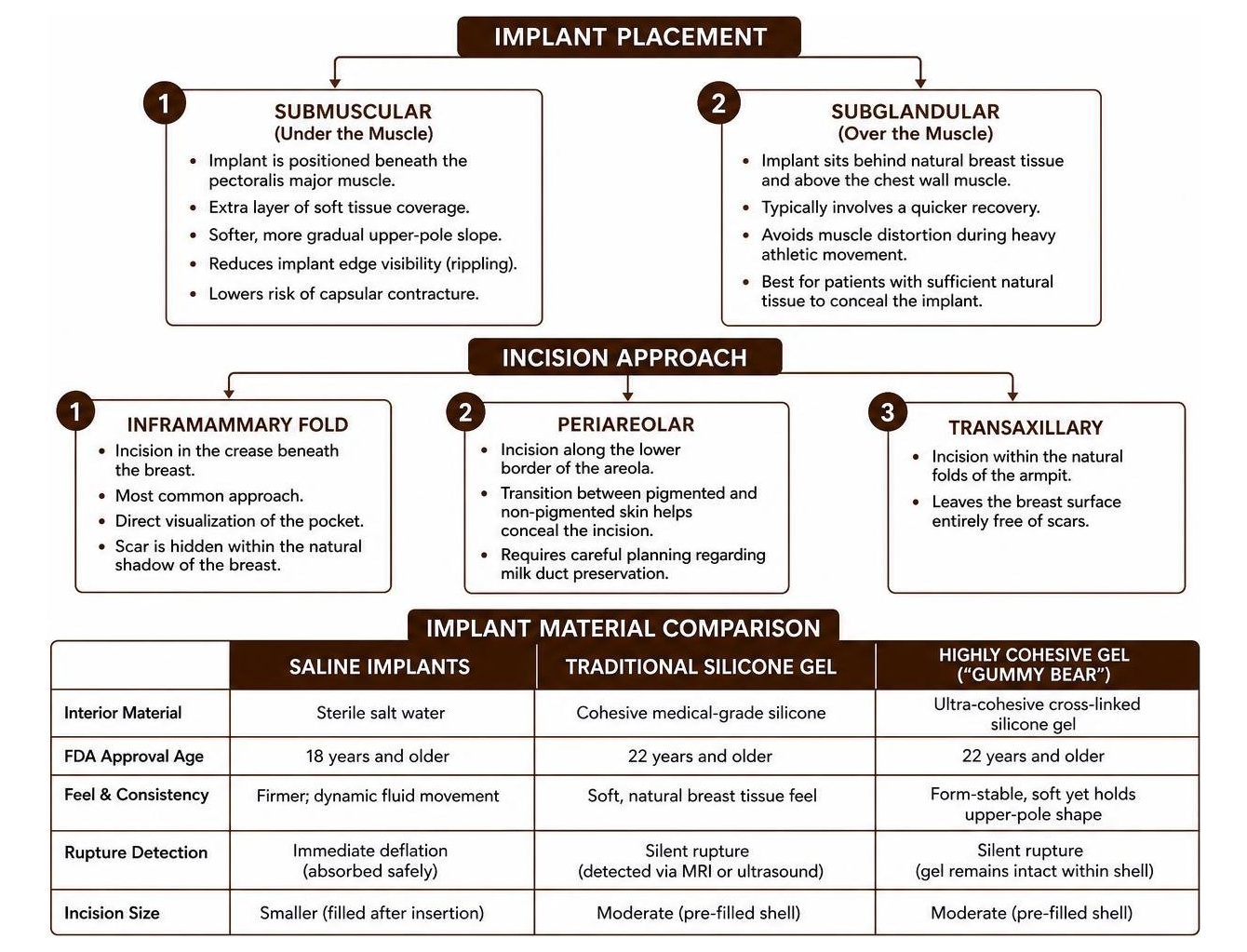
Surgical placement generally falls into two categories:
- Submuscular (Under the Muscle): The implant is positioned beneath the pectoralis major muscle. This technique provides an extra layer of soft tissue coverage, which creates a softer, more gradual slope at the upper pole of the breast, reduces the visibility of implant edges (rippling), and lowers the risk of capsular contracture.
- Subglandular (Over the Muscle): The implant sits directly behind the natural breast tissue and above the chest wall muscle. This approach typically involves a slightly quicker recovery and avoids muscle distortion during heavy athletic movement, making it suitable for patients with sufficient natural tissue to conceal the implant.
Surgeons also utilize different incision approaches based on your anatomy and the chosen implant:
- Inframammary Fold: Placed discreetly in the crease beneath the breast. This is the most common approach because it provides direct visualization of the surgical pocket and hides the resulting scar within the natural shadow of the breast.
- Periareolar: Placed along the lower border of the areola. The transition between pigmented and non-pigmented skin helps conceal the incision line, though it requires careful planning regarding milk duct preservation.
- Transaxillary: Placed within the natural folds of the armpit, leaving the breast surface entirely free of scars.
Selecting the right implant material is just as vital. For a deeper breakdown of your options, explore our comprehensive Breast Implants 101 Guide.
| Feature | Saline Implants | Traditional Silicone Gel | Highly Cohesive Gel (“Gummy Bear”) |
|---|---|---|---|
| Interior Material | Sterile salt water | Cohesive medical-grade silicone | Ultra-cohesive cross-linked silicone gel |
| FDA Approval Age | 18 years and older | 22 years and older | 22 years and older |
| Feel & Consistency | Firmer; dynamic fluid movement | Soft, natural breast tissue feel | Form-stable, soft yet holds upper-pole shape |
| Rupture Detection | Immediate deflation (absorbed safely) | Silent rupture (detected via MRI or ultrasound) | Silent rupture (gel remains intact within shell) |
| Incision Size | Smaller (filled after insertion) | Moderate (pre-filled shell) | Moderate (pre-filled shell) |
Patients exploring traditional fluid-filled options can learn about Saline Implants for Breast Augmentation, while those desiring shape stability and a natural aesthetic often opt for Cohesive Gel Breast Implants.
How to Choose the Best Specialist for Breast Augmentation Near Me

Finding the right plastic surgeon is the single most critical factor in achieving safe, beautiful, and enduring results. When you type search queries looking for the Best Breast Augmentation Surgeon, the abundance of online ads and social media profiles can feel overwhelming. Cutting through the marketing noise requires a systematic approach to verifying safety standards, professional background, and aesthetic harmony.
Begin by confirming that your prospective surgeon is certified by the American Board of Plastic Surgery (ABPS). Unlike general medical licenses or cosmetic certifications issued by non-accredited private boards, ABPS certification demands rigorous multi-year surgical residencies specifically focused on plastic and reconstructive surgery.
Equally important is ensuring that your procedure will take place in an accredited ambulatory surgery facility (such as AAAASF or Quad A certification) or an accredited hospital. Operating in an accredited environment guarantees that the surgical suites, emergency equipment, anesthesia protocols, and support staff meet the highest state and national standards.
Evaluating Qualifications for Breast Augmentation Near Me
Beyond credentials, you should evaluate the volume of aesthetic breast procedures the surgeon performs each month. High surgical volume translates to refined technical skill, an intuitive eye for natural proportions, and the ability to prevent or manage uncommon complications seamlessly.
Reviewing Plastic Surgery Consultation: What to Know will help you prepare for this pivotal first appointment. When you meet with local surgeons, bring a dedicated checklist of questions:
- Are you certified by the American Board of Plastic Surgery?
- How many breast augmentations do you perform each year?
- Where do you perform surgery, and is the surgical facility fully accredited?
- Which implant shapes, profiles, and placement planes do you recommend for my frame, and why?
- Can I see before-and-after photographs of patients with a similar body type to mine?
- What is your protocol for post-operative pain management and follow-up care?
- What are the revision policies if I experience complications such as capsular contracture or asymmetry?
Typical Costs for Breast Augmentation Near Me and Financing Options
According to national plastic surgery statistics, the baseline surgeon’s fee for breast augmentation averages around $4,235. However, this figure does not reflect the total out-of-pocket investment. A complete surgical quote includes:
- Surgeon’s Professional Fee: Reflects the surgeon’s training, skill level, and procedural volume.
- Operating Room Facility Fees: Covers specialized surgical staff, sterile equipment, and clinical suites.
- Anesthesia Fees: Covers the board-certified anesthesiologist or CRNA providing continuous care.
- Implant Material Costs: Cohesive silicone and form-stable implants generally cost more to manufacture than saline implants.
- Post-Surgical Supplies: Medical compression bras, prescription medications, and recovery garments.
Because breast augmentation is an elective aesthetic procedure, standard health insurance does not cover the associated costs. To understand regional pricing structures, review our breakdown of Breast Augmentation New Jersey Cost. To help make your aesthetic goals manageable, our team offers structured payment plans and flexible medical credit solutions; you can explore these through our Breast Augmentation Financing Options.
Preparing for Surgery, Recovery Timelines, and Expected Outcomes
A smooth surgical journey depends on careful pre-operative preparation and clear post-operative expectations. Before entering the operating room, you will complete standard pre-operative clearance testing, including blood panels and, if indicated by age or family history, a baseline mammogram.
To minimize surgical risks and ensure optimal tissue perfusion, you must stop using all nicotine products—including vaping and smoking—for at least four to six weeks before and after surgery. Certain medications, anti-inflammatory drugs, and herbal supplements (such as aspirin, ibuprofen, fish oil, and vitamin E) must also be discontinued two weeks prior to surgery to reduce bleeding risks. Review our guide on What Breast Surgery Patients Should Know for comprehensive lifestyle recommendations.
Understanding your recovery timeline eliminates anxiety and allows you to organize your home life, work schedule, and child care:
- Days 1 to 3: This is the most tender phase. You will experience tightness in the chest, mild swelling, and fatigue. We prescribe structured oral medications to keep you comfortable. Light walking around your home is encouraged to stimulate circulation.
- Week 1: Most patients feel significantly better and can taper off prescription pain medications in favor of mild over-the-counter options. Non-strenuous desk work can typically be resumed after 5 to 7 days.
- Weeks 2 to 4: Bruising fades, and initial swelling begins to subside. You will continue wearing your supportive surgical garment around the clock. Light cardiovascular activity (such as brisk walking or stationary cycling) is permitted, but upper-body lifting remains restricted.
- Weeks 6 and Beyond: Tissues soften, and implants begin to settle naturally into the lower pole of the breast pocket (“drop and fluff”). Your surgeon will clear you for unrestricted heavy lifting, running, and high-impact workouts. Learn more about the healing journey through our guide on Breast Augmentation Recovery Time.
Achieving Natural Results and Long-Term Maintenance
Achieving an elegant, natural-looking breast enhancement requires matching the implant’s diameter, projection, and fill volume to your anatomical framework. Choosing an implant that is too wide for your chest wall can cause unnatural lateral fullness, while excessive projection on a narrow frame may create an overly rounded, artificial look.
Viewing real patient outcomes in our Breast Augmentation Before & After gallery demonstrates how tailored implant dimensions complement diverse body silhouettes.
Over the long term, breast implants are durable medical devices, but they require periodic monitoring. Modern silicone cohesive gel implants maintain their structural integrity for many years. We recommend routine clinical evaluations and occasional ultrasound or MRI surveillance to confirm shell integrity and assess tissue health over time.
Frequently Asked Questions About Breast Augmentation
How long do breast implants typically last before needing replacement?
Breast implants are not lifetime devices, but they do not have a rigid expiration date. While some patients retain their initial implants for 15 to 20 years or longer without issue, many choose to undergo revision surgery after 10 to 15 years to update their size, address natural age-related tissue changes, or manage capsular contracture. You only need implant exchange or removal if you desire an aesthetic change or if an imaging scan detects a compromise in the shell. For more detailed data on longevity, read about Breast Augmentation Costs & Outcomes.
Can I combine breast augmentation with a breast lift?
Yes, combining breast augmentation with a mastopexy (breast lift) is an exceptionally popular and effective way to restore both volume and youthful position in a single surgery. If you experience significant sagging (ptosis) or stretched skin following pregnancy, weight fluctuations, or natural aging, an implant alone may simply push downward rather than elevate the breast. A combined approach repositions the nipple-areolar complex higher on the breast mound, removes excess skin, and places an implant to fill out the upper pole. Explore how this dual approach works in our overview of the Breast Augmentation with Lift Combo.
What non-surgical alternatives are available for breast enhancement?
Patients seeking subtle volume enhancement without foreign implants may consider autologous fat transfer (fat grafting). In this procedure, your surgeon harvests excess fat from areas like your abdomen, flanks, or thighs via gentle liposuction, purifies the fat cells, and strategically injects them into the breasts. Fat transfer provides a modest increase (typically one-half to one full cup size) and relies entirely on your own natural tissue. However, it cannot achieve the significant upper-pole fullness, projection, or substantial size increases made possible by surgical implants.
Your Personalized Transformation in Montclair, New Jersey
A successful breast augmentation begins with honest communication, meticulous surgical planning, and trusted medical expertise. At The Plastic Surgery Group of New Jersey, our goal is to deliver beautiful, natural-looking transformations in an environment dedicated to patient safety and personalized care.
Our renowned, board-certified plastic surgeons, Dr. Allen D. Rosen M.D. and Dr. Valerie J. Ablaza M.D., along with our skilled surgical team, bring decades of aesthetic experience to our state-of-the-art surgical facility in Montclair, New Jersey. Whether you are seeking subtle restoration after pregnancy, correction of breast asymmetry, or a dramatic boost in confidence, we tailor every step of your surgical journey to your unique body and lifestyle.
Take the first step toward achieving your aesthetic goals. Explore our dedicated Breast Augmentation Services and contact our Montclair team today to schedule your private consultation.


